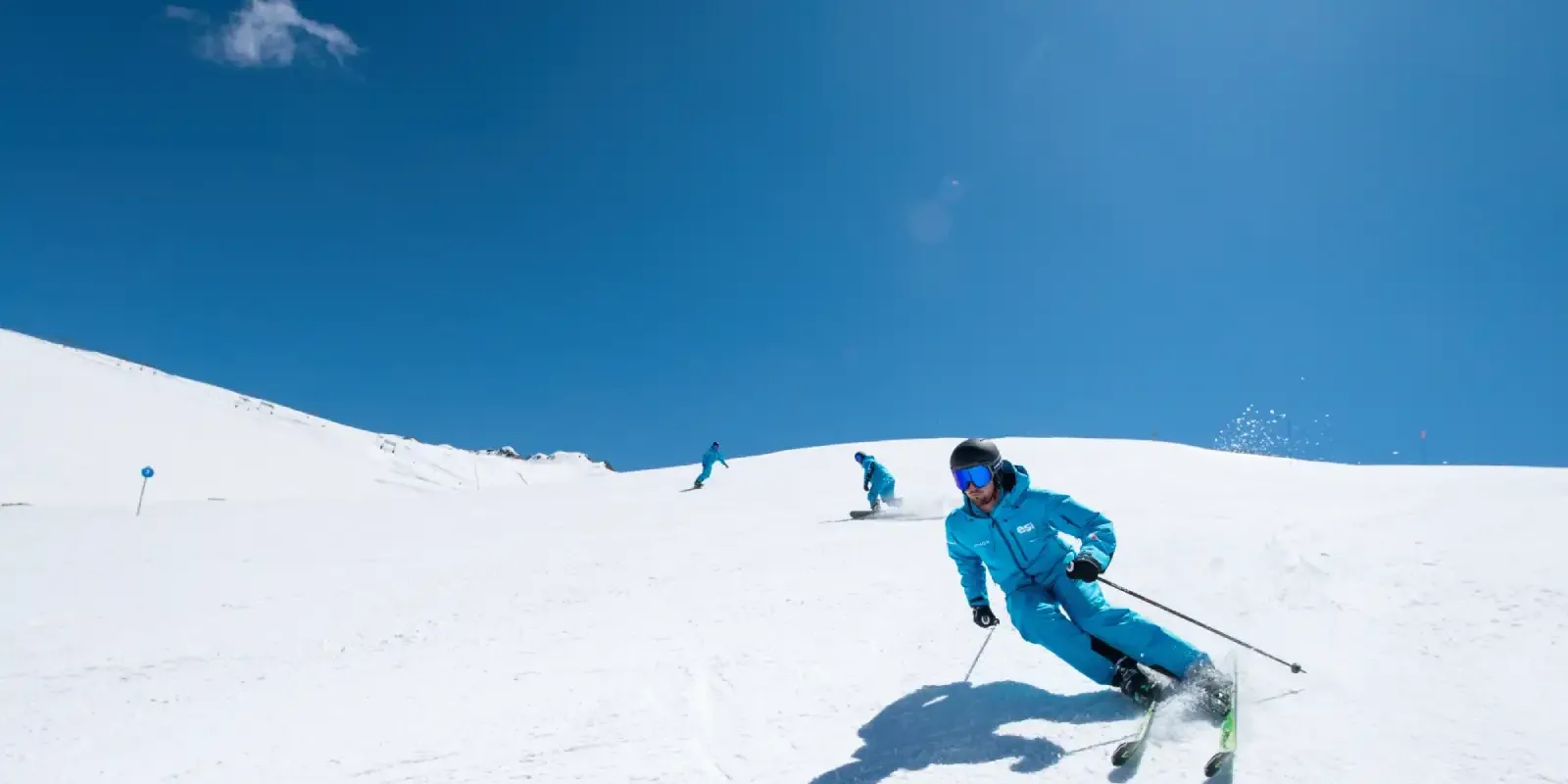
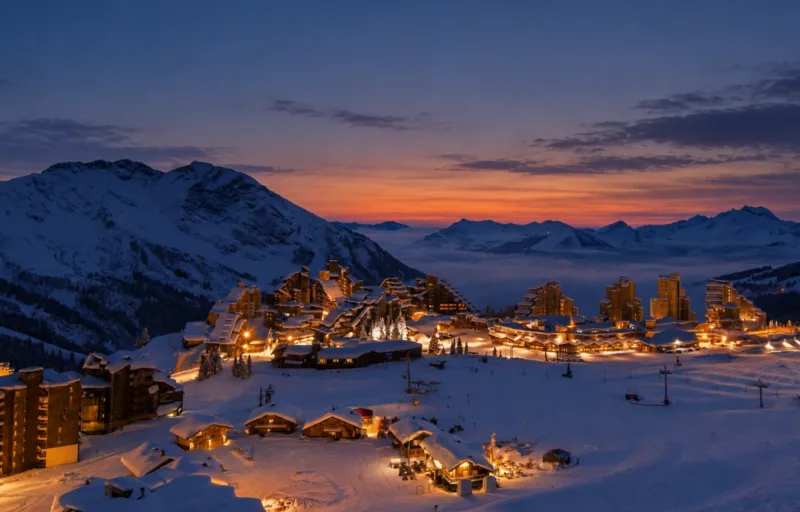
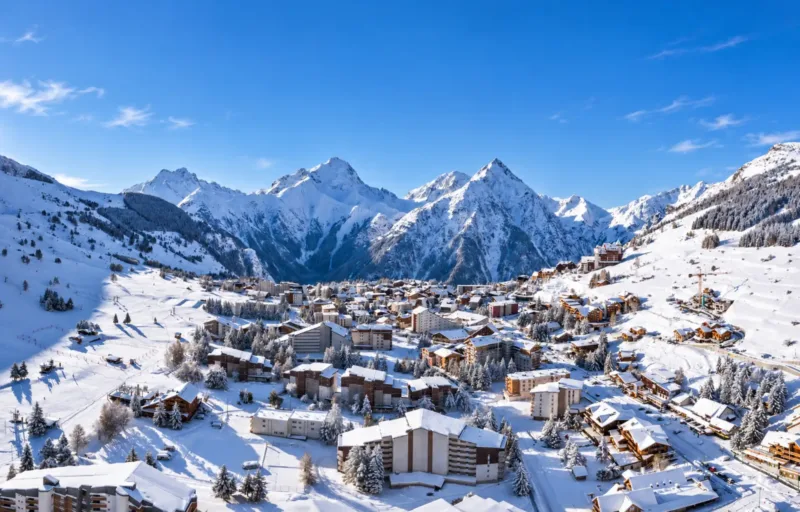
The Skiing is one of the oldest forms of movement on snow. Its history dates back thousands of years, long before the advent of ski resorts and lifts. In the snowy regions of Europe and Asia, populations gradually devised solutions to make it easier to travel during the winter.
To progress on the snow, they used long wooden planks, which distributed the body weight more evenly and made it easier to move on snowy surfaces. At that time, skiing primarily served a practical need: to move around, hunt, transport equipment, or join other communities.
Over the centuries, techniques have evolved. Skiing then gradually evolved from a simple means of locomotion to a sport and leisure activity. The history of skiing It thus accompanies that of the mountain populations, but also the technical advances that have profoundly transformed the way we glide.
From the first wooden skis to modern skiing
For centuries, skiers have been making their skis from locally available wood. The shapes, sizes, and manufacturing techniques vary depending on the region and use. The practitioners then fasten their shoes with rudimentary systems, notably straps.
However, the equipment has evolved considerably from the 19th century onwards, and in the 20th century. Manufacturers gradually improved the attachments, the shape of the skis, and their durability. The appearance of metal brackets They constitute an important advance, especially since they allow skiers to better control their trajectories on hard snow.
Then, manufacturers incorporate new materials and develop increasingly precise manufacturing processes. The ski thus gains in stability, maneuverability and performance.
At the same time, different disciplines are beginning to differentiate themselves. In the Alps, the Alpine skiing develops around the descents and turns on steeper slopes. In Scandinavian countries, the Nordic skiing It retains its role of long-distance travel even more effectively.
Cross-country skiing uses, in particular, long skis that are relatively narrow. Additionally, the binding usually leaves the heel free, which makes it easier for the skier to move while skiing.
Telemark skiing, a historical technique still practiced
The telemark It also holds an important place in the history of skiing. This technique takes its name from the region of Telemark in Norway and developed especially in the 19th century.
Unlike modern alpine skiing, telemark skiing leaves the skier’s heel free. To perform turns, the practitioner flexes his legs and adopts a characteristic position, with one ski positioned higher than the other.
This technique has had a strong influence on the development of modern skiing. To this day, enthusiasts still practice telemark skiing in many resorts. The discipline thus combines tradition, technical skill, and unique gliding sensations.
Cross-country skiing, a return to the origins
The skiing and hiking It is also part of a very ancient history. For centuries, the populations living in the snowy regions have been looking for solutions to climb the slopes with their skis.
To facilitate the ascent, skiers once used animal skins under their skis to improve grip. Today, practitioners use Synthetic or mixed seal skins, These allow you to progress uphill while limiting the backward movement of the ski.
Once at the summit, skiers take off their skins before embarking on the descent. Skiing thus combines physical effort, skating technique, and the discovery of the mountains.
Furthermore, the armies extensively used skis to move about in snowy terrain. Mountain troops in particular contributed to the development of certain techniques and equipment during the 19th and 20th centuries.
Today, cross-country skiing is experiencing a new surge in popularity. Many enthusiasts enjoy this discipline for its sporting aspect, but also for the opportunity to explore the mountains beyond the well-maintained trails.
The modernization of ski bindings
The evolution of Ski bindings also played a major role in the history of the discipline. In the 19th century, the Norwegian Sondre Norheim It also participates in the evolution of equipment and turning techniques.
At that time, skiers still used very simple systems to keep their shoes in place. Gradually, manufacturers began to develop more advanced attachments to improve control of the skis.
In the 20th century, innovations accelerated. Modern alpine ski bindings, for example, allow the boot to be kept precisely positioned while integrating release mechanisms. In the event of a significant fall, these can release the boot when certain constraints are reached.
In parallel, the design of skis is also undergoing a real revolution. Manufacturers are now combining several materials such as: wood, glass fibers, carbon or various composite materials.
Despite these developments, wood still plays a central role in the manufacture of many high-performance skis. However, modern technologies allow manufacturers to precisely tailor the stiffness, flex, grip, and overall performance of each model.
1924: Creation of the International Ski Federation
The beginning of the 20th century marks a decisive step in the transformation of skiing into an international sport. Competitions gradually develop and attract more and more practitioners.
And 1924, the creation of the International Ski Federation (FIS) accompanies this restructuring. The same year, Chamonix hosted the first competitions in France that would later be recognized as the First Winter Olympic Games.
From then on, sports skiing experienced a spectacular development. International competitions gained in popularity while the various disciplines gradually took shape.
Subsequently, winter sports resorts develop, the ski lifts multiply and the equipment becomes more accessible. Skiing then attracts an ever-widening audience.
Today, the disciplines of skating take many forms: Alpine skiing, cross-country skiing, telemark skiing, ski touring, freestyle, freeride or even competitive disciplines.
Thus, in just a few millennia, skiing has gone from being an indispensable means of transportation in snowy regions to becoming one of the emblematic sports of the mountains. Yet, despite technological advances and the evolution of equipment, its fundamental principle remains the same: sliding on the snow and adapting to the terrain.
The history of skiing therefore continues to be written each winter, between mountain traditions, technical innovations, competitions and the simple pleasure of skiing.