The mountain is a formidable ecosystem for flora and fauna; we have selected 10 essential mountain plants for you to know. Medicinal herb, edible plant or even rarer species, discover the most interesting varieties found in our mountains. This focus will offer you a first approach to better recognize certain plants and thus better respect their environment.
In our selection, you will find the flowering period, the altitude and many other specific information to have a better chance of admiring its different varieties in their natural habitat.
Nature has so much to offer us when we take the time to observe it better.
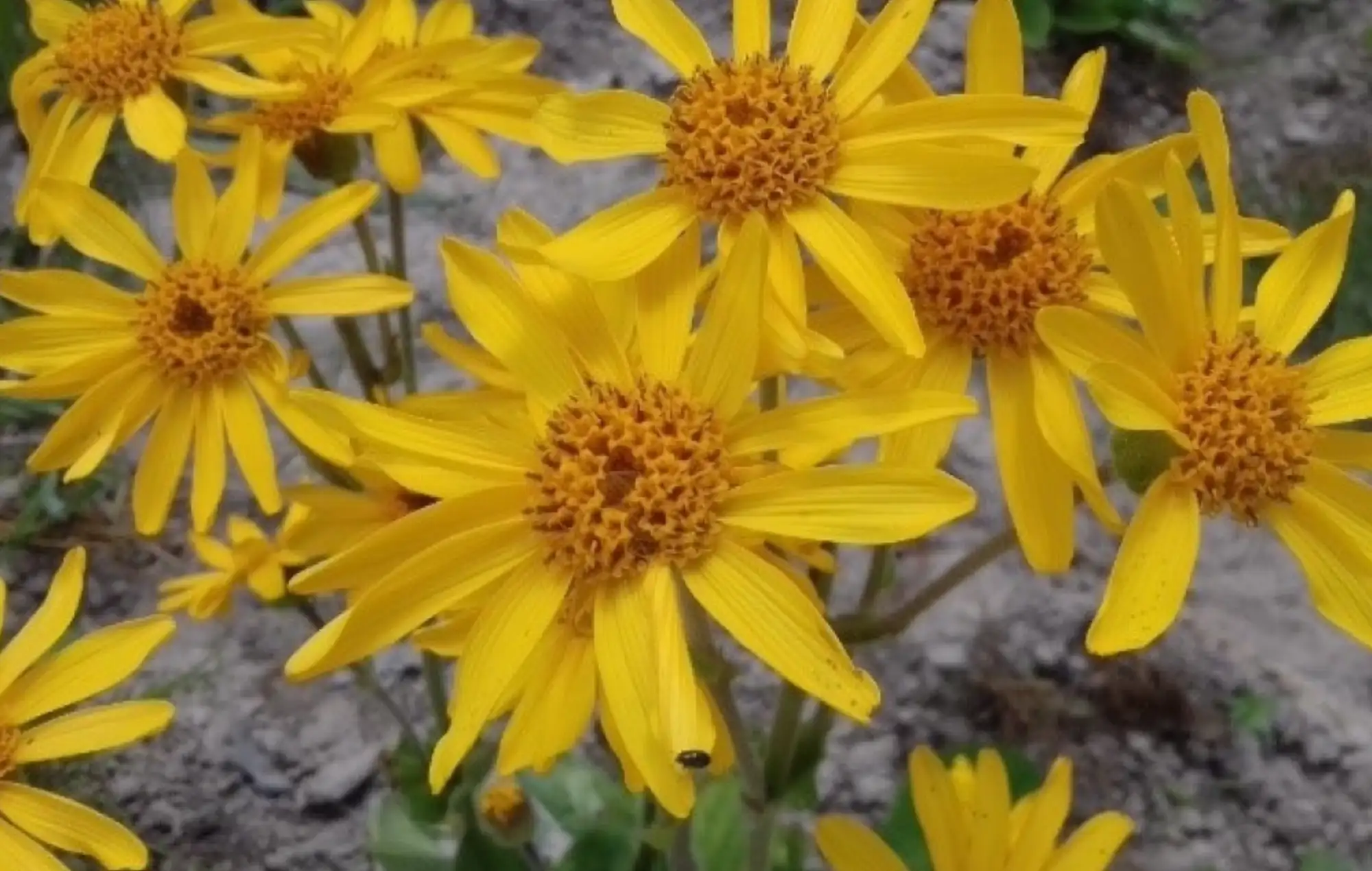
Arnica montana L. Asteraceae
L’Arnica It is a beautiful yellow-orange «marigold» from 20 to 60 cm tall with a sturdy stem that is found mainly in the meadows and pastures of the mountains with siliceous or decalcified soils. It is present in all the French massifs.
Altitude: from 600 to 2800 m
Flowering from June to September
It was long called the «Tobacco of the Savoyards» because once upon a time the dried leaves replaced tobacco.
But the plant is toxic by internal route and only the Arnica tincture remains used on hematomas and ecchymoses.
Attention: The picking of mountain flowers is regulated.
Leontopidium alpinum . Asteraceae
That’s the’
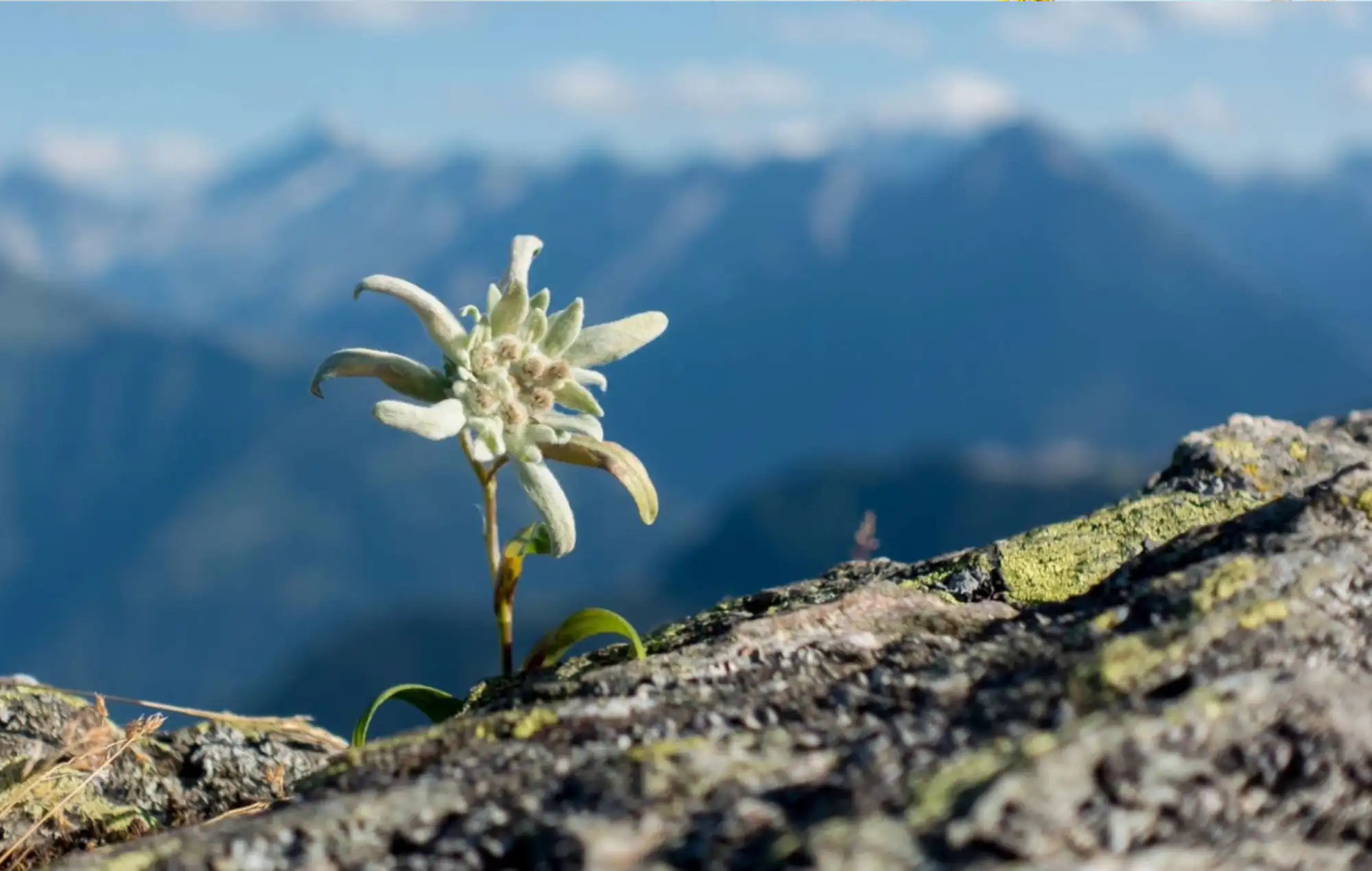
Edelweiss, The silver star.
It is an astonishing plant that is one of the most evolved in the plant world. The small flowers are arranged in small clusters in a woolly structure that simulates a single flower.
The silver down reflects the sunlight and thus protects the flower from drying out.
The flowers appear from July to September.
The Edelweiss grows up to 2500 m above sea level in sunny rocky meadows and crevices in rocks.
It is found in the Vosges, the Jura and the Alps.
This attractive and symbolic plant is subject to a regulated harvesting.
It is rare in the Alps.
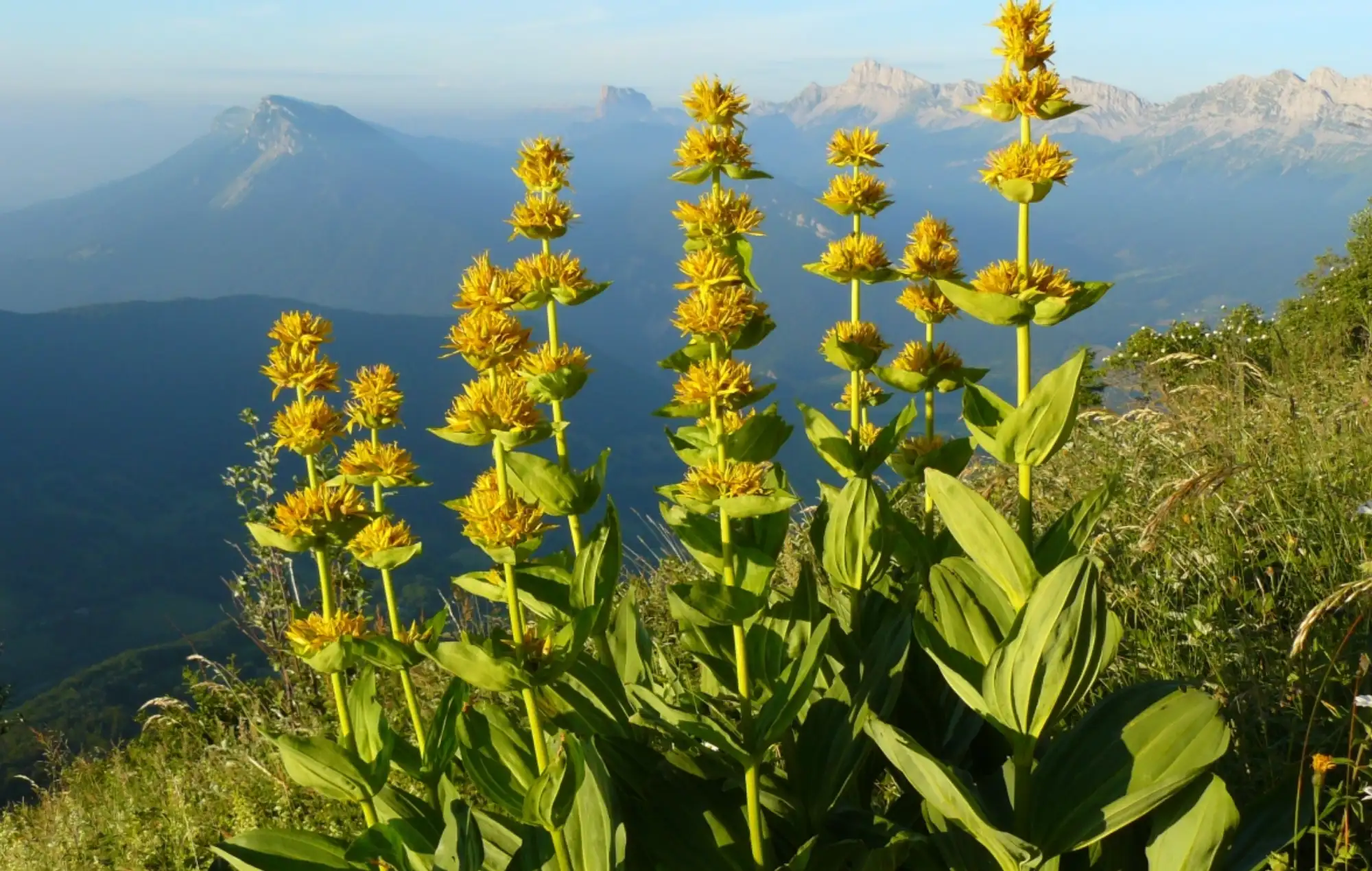
Gentiana lutea L. Gentianaceae
This beautiful Yellow Gentian It is a large perennial plant of meadows and mountain pastures. Its leaves are opposite, which distinguishes it from the white veratrum, a toxic plant with alternate leaves.
It can exceed one meter in height.
The flowering takes place in July, August.
It can be found up to 2500 m altitude.
Its medicinal properties are well known: The dried root is used as a good fever reducer and an excellent stimulant of digestive functions.
Many aperitifs based on yellow gentian and spirits are produced in the Vosges, the Jura, the Massif Central and the Alps.
The harvesting is regulated. The plant is listed on the red list of endangered species in Europe
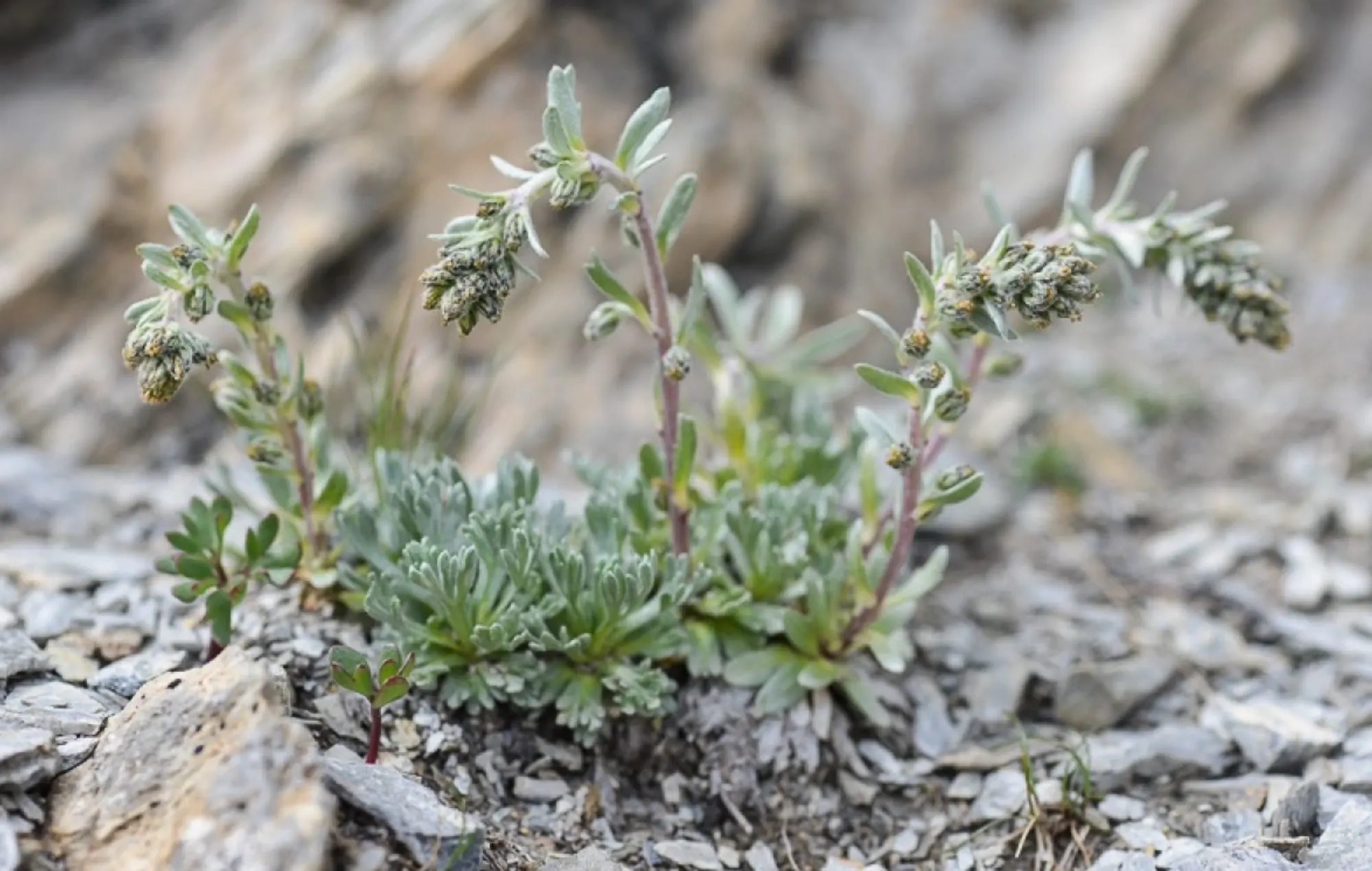
Artemisia genipi Weber L. Asteraceae
It is the true or black genepi that grows very high in altitude up to 3500 m above sea level,
It is a silky-woollen plant of whitish-green color that contains small yellowish tubular flowers in capsules.
The genuine Génépi contains a strongly aromatic principle (the smell of absinthe).
There are other varieties that resemble it: the woolly Genepi, the white Genepi.
It is found at high altitudes in the crevices of rocks and on the moraines.
The flowering period extends from July to September.
The Génépi is threatened by excessive picking and the work of lifting equipment in some skiable areas.
Professional pickers must apply for a permit from the administration.
The family harvest is limited to a handful.
Its aperitive and digestive properties explain the presence of many flavored liqueurs and beers.
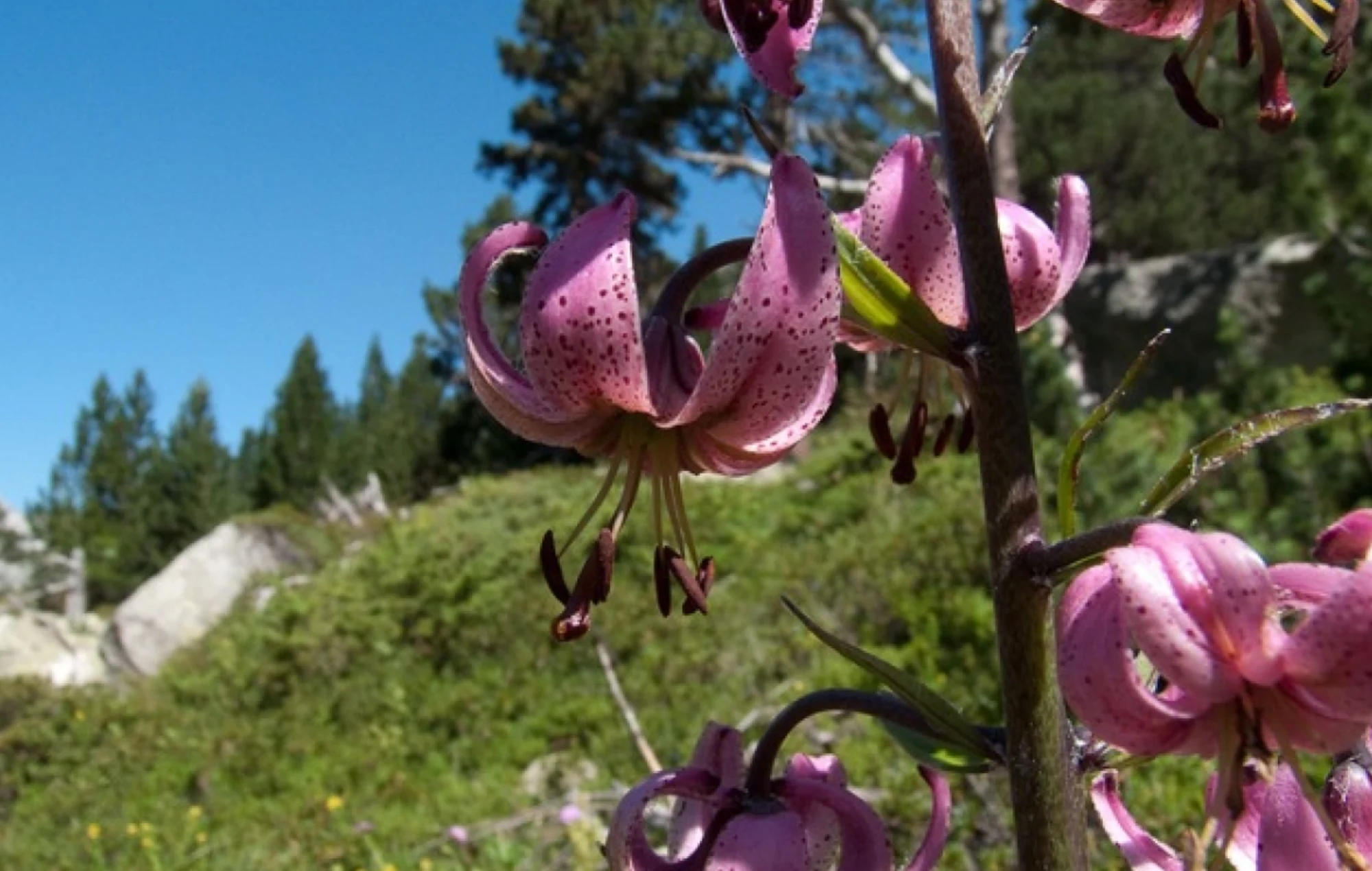
Lilium martagon L. Lilac
This is the linden tree, a very aesthetic species that can reach over a meter in height.
It is a bulbous species that is too often plucked by walkers to decorate gardens.
The pink-violet flowers dotted with purple curl upwards and emit a strong scent. The flowers are grouped in clusters.
This species can be found up to 2000 m above sea level in cool, rocky places, such as prairies and moorlands with Rhododendron plants.
The flowering period extends from June to August.
The harvesting of this linden tree is highly regulated.
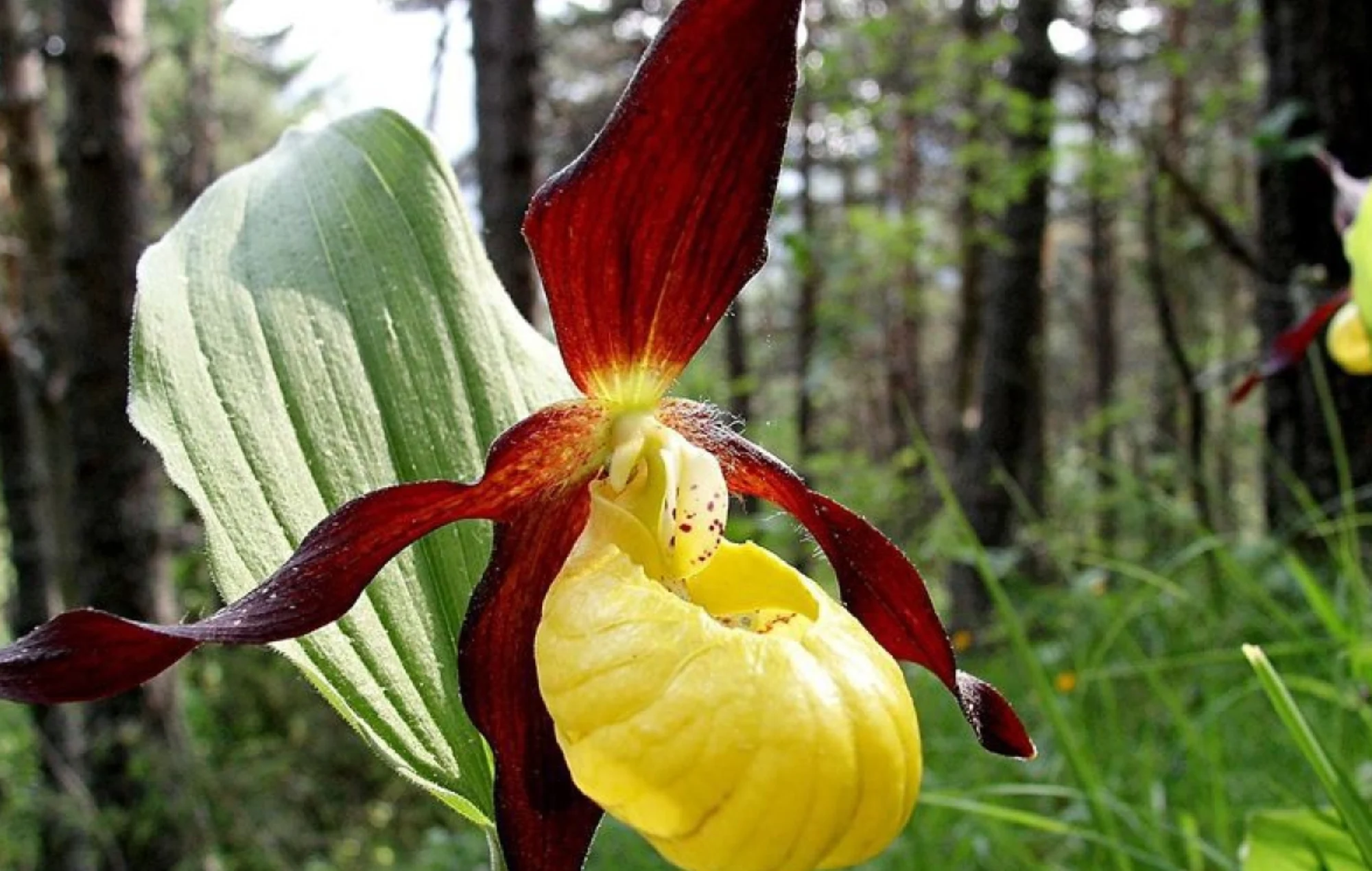
Cypripedium calceolus L. Orchidaceae
It’s the mythical Venus Boot that everyone hopes to encounter.
This large orchid (20 to 80 cm) stands with 1 or 2 flowers per stem.
The flower, typical of the Orchidaceae, has purple-pink petals grouped in a casque and a bright yellow labelle shaped like a slipper.
The insects are temporarily trapped in the trap and emerge with pollen to pollinate other flowers.
The flowering extends from May to July in the clearings of the holm oak-spruce forests. .
Too closed-off environments are unfavorable for him.
It is very rare in the Pyrenees. It is found in the limestone mountains and is subject to total national protection. .
Despite its status as a protected species, collections of bulbs and flowers continue. .
In addition to the prohibited harvesting, the Venus Boot is threatened by the natural closure of the clearings; therefore, forest development plans must also take into account the creation of more airy woodlands and the maintenance of the clearing maintenance.
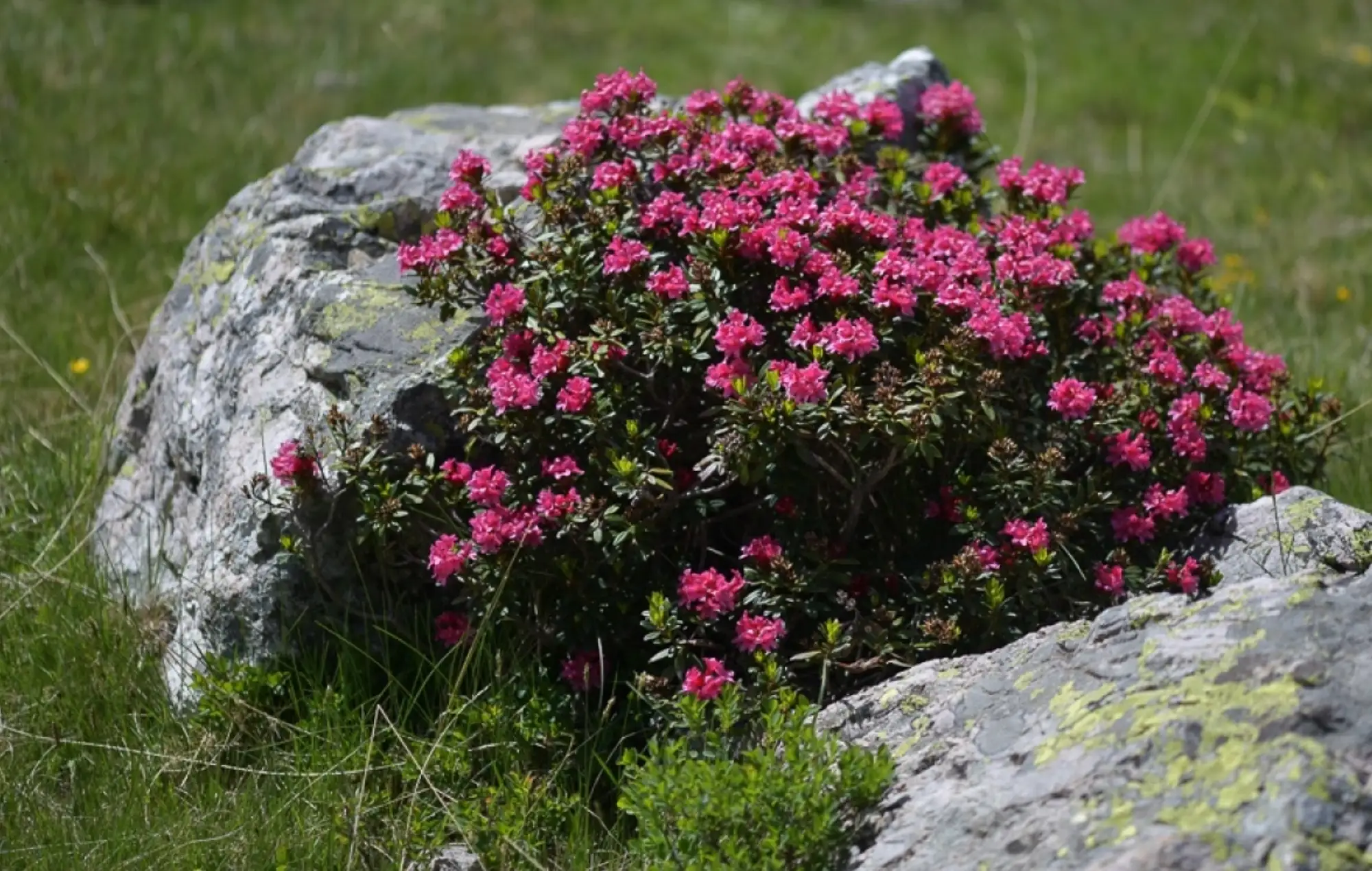
Rhododendron ferrugineum L. Ericaceae
The Rhododendron ferrugineum is a perennial shrub that can grow to over
1 m in height. It grows between 1500 and 2000 m above sea level at the limit of the sub-alpine zone.
This very branched shrub has oval leaves with a rust-colored underside.
The flowering takes place from June to August. The numerous flowers are bright red, giving the mountain an exceptional coloration over large areas.
The flowers exude a very pleasant, vagabond-like scent. It is also called the Alpine rose.
This rhododendron grows on acidic and fertile soils. It is less common in the limestone mountains, where another species takes over: the Rhododendron hirsute.
It is an arboretum that grows as the alpine pastures are abandoned.
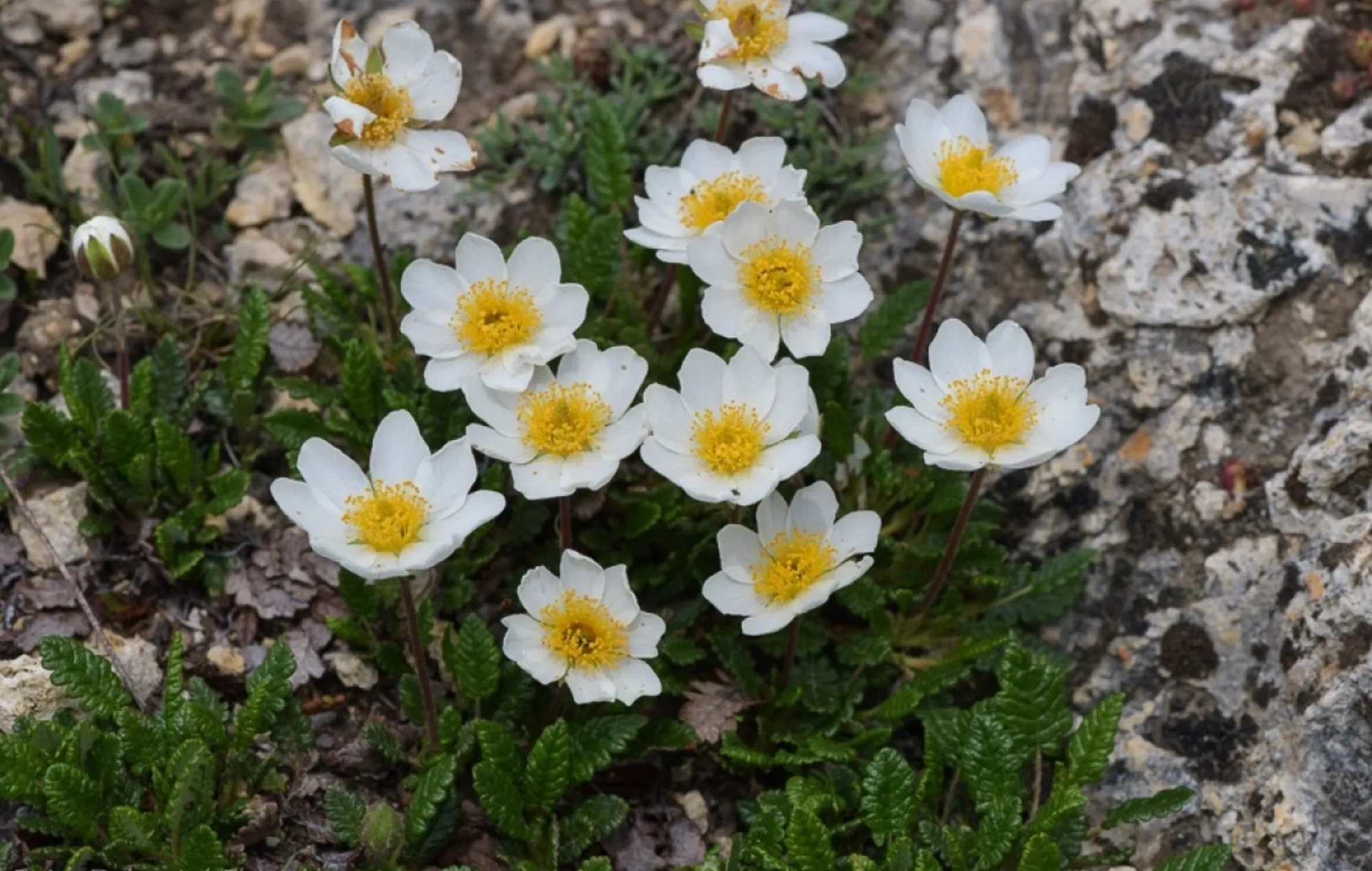
Dryas octopetala L. Rosaceae
This Dryad is a cousin of the rose with the particularity of having flowers with 8 petals.
Its small, persistent leaves resemble oak leaves. The Dryade is also called Chênette.
The white flowers, 2 to 4 cm wide, appear from May to August depending on the altitude.
The plant grows in rocky outcrops and limestone meadows between 1200 and 2500 m altitude.
The Dryade is characteristic of cold environments; in this capacity, it gave its name to a geological period, the Dryas, a period of cooling associated with the last ice age (from -14,000 to -9,000 years).
In everyday usage, the plant was used for its leaves and served as tea in the Alps.
Today it is protected in many regions.
It plays a role in steep slopes to consolidate the landslides
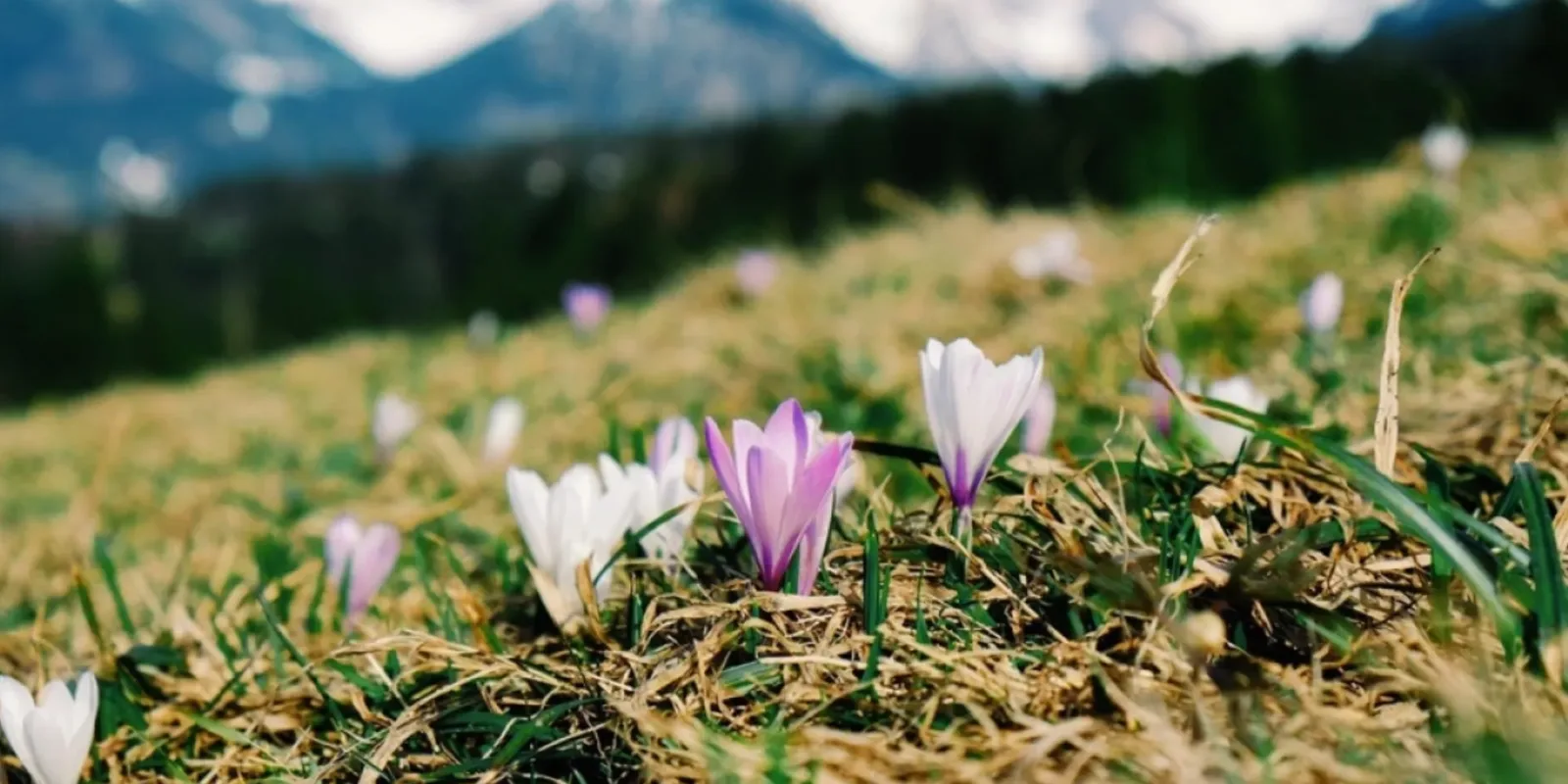
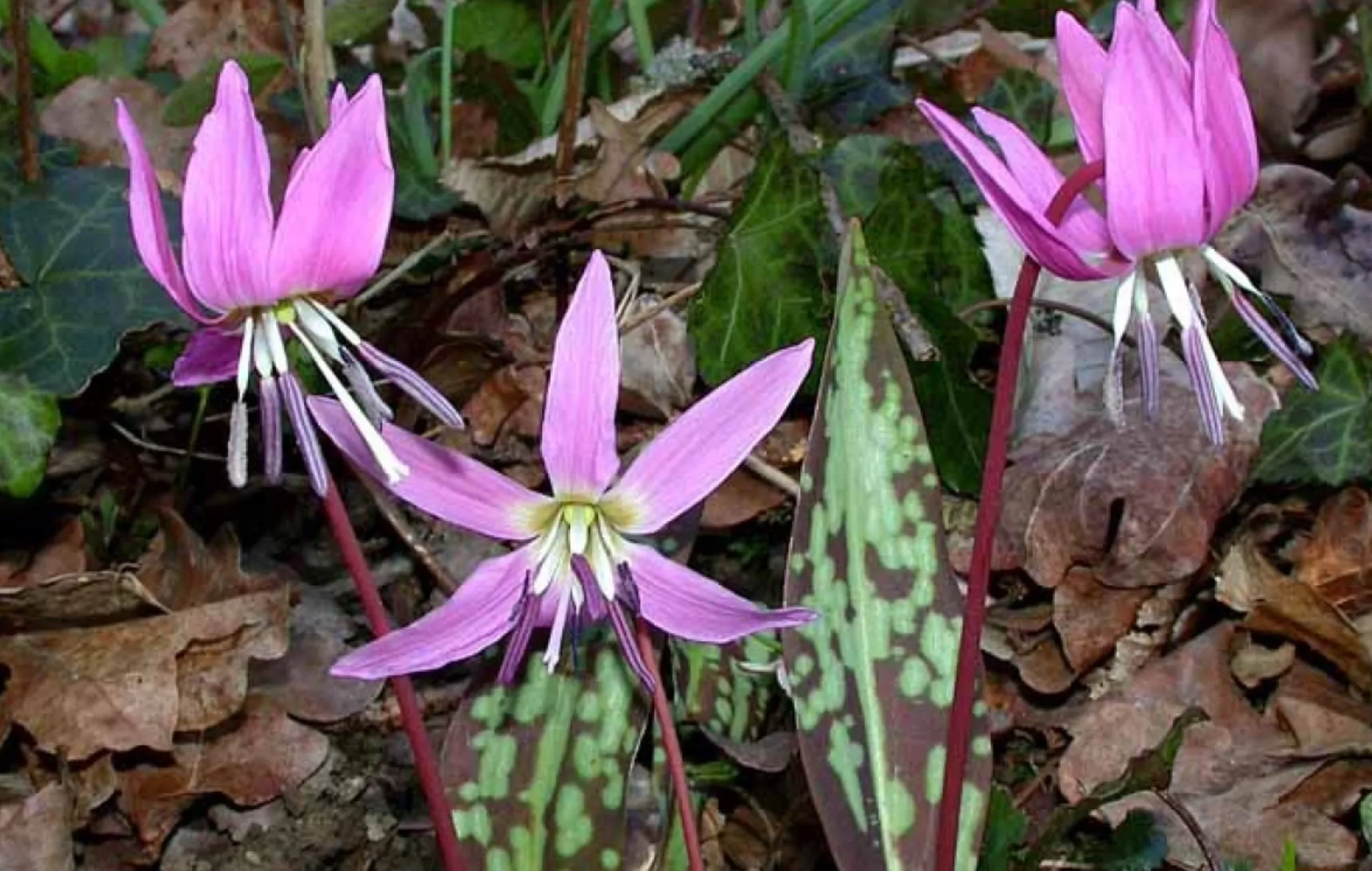
Erythronium dens-canis L. Lilac
The canine tooth erethrine is rare and very vulnerable if its canine-shaped bulb is torn off!
This plant has two opposite leaves with reddish spots.
In the spring, it will be one of the first flowers to break through the snow cover.
The purple rose flower is formed of 6 petals that arch upwards.
At low altitude, it is found in the clear undergrowth of the deciduous trees, the shaded edges and slopes.
It can also be found up to 1500m above sea level in meadows and grassy areas in full sunlight.
It is a very vulnerable species because it is subject to numerous harvesting practices, especially in spring at low altitudes.
It is subject to collection regulations. Foresters must take its presence into account in their planning plans.
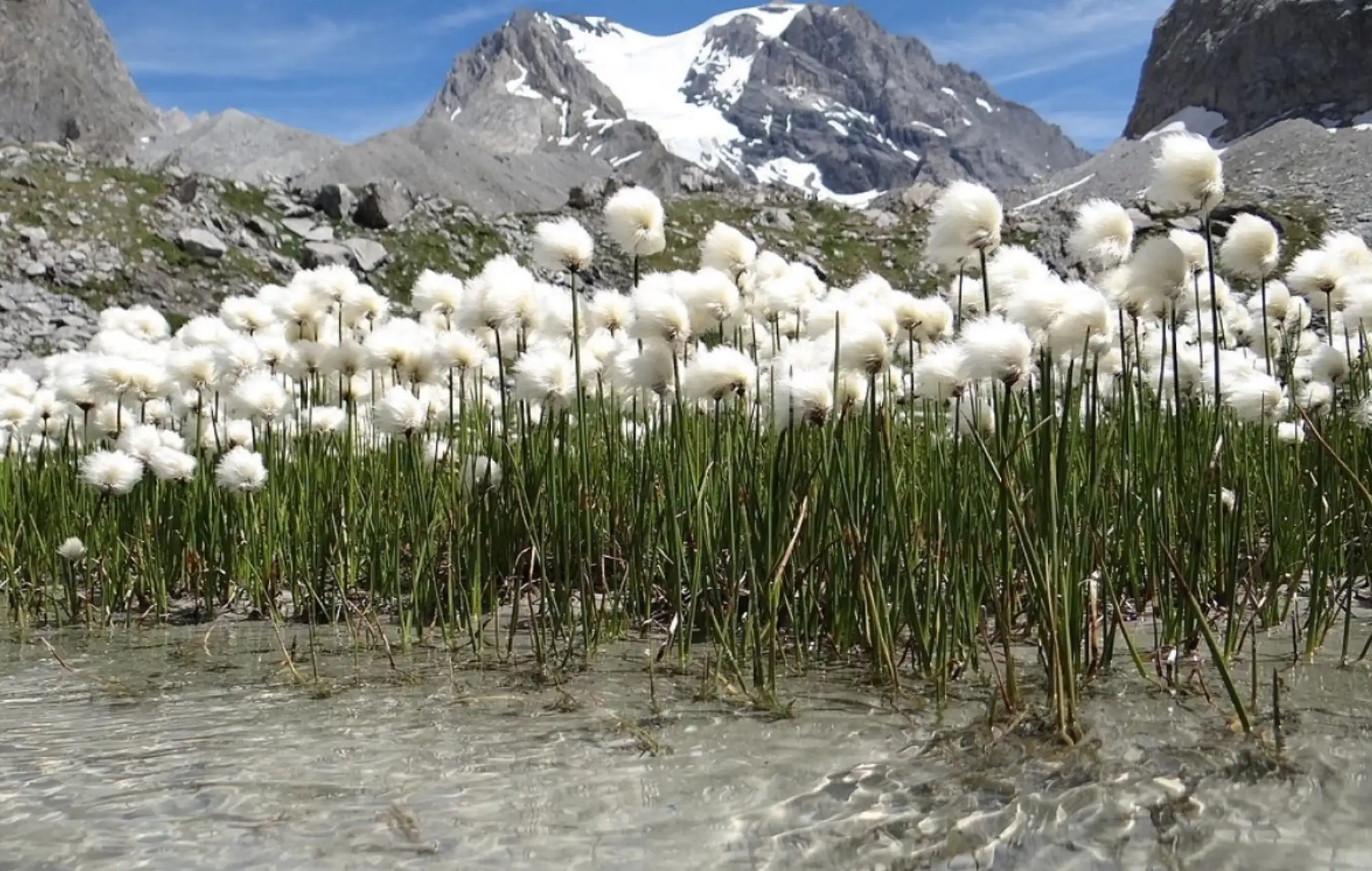
Eriophorum Scheuchzeri Hoppe Ericaceae
This Scheuchzer's Lignage lives in large colonies in loamy or marshy soils.
The female flowers, which are hardly visible when young, then develop beautiful white, tuberous inflorescences that are visible in July and August. The seeds can thus be dispersed by the wind.
Eriophorum means «wool door»
The plant, 10 to 40 cm tall, grows in acidic, high-altitude bogs.
In the past, these «velvet covers» were collected to serve as padding for pillows and cushions.
These plants are associated with the protection of wetlands and peatlands.
Indeed, all drainage and water retention operations for crop snow can weaken these hygrophilic plants.
Well, now you are well-versed in mountain plants; we hope that our selection will help you recognize certain varieties during your next mountain hikes.