Off-piste safety at the heart of the ESi training courses
Every winter, the’International Ski School (ESi) organizes sessions dedicated to Safety off-piste. These days allow ski instructors to update their knowledge and work on different situations encountered in the field.
In the mountains, conditions constantly change. Weather, wind, snowfall, temperature, and the configuration of the terrain all influence the stability of the snowpack. Therefore, professionals must regularly update their knowledge and maintain their skills.
To support its instructors in this process, the ESi organizes refresher courses at various stations in the French Alps, notably in collaboration with ANENA and the PGHM of Bourg-Saint-Maurice.
Why is it important to regularly train in off-piste safety?
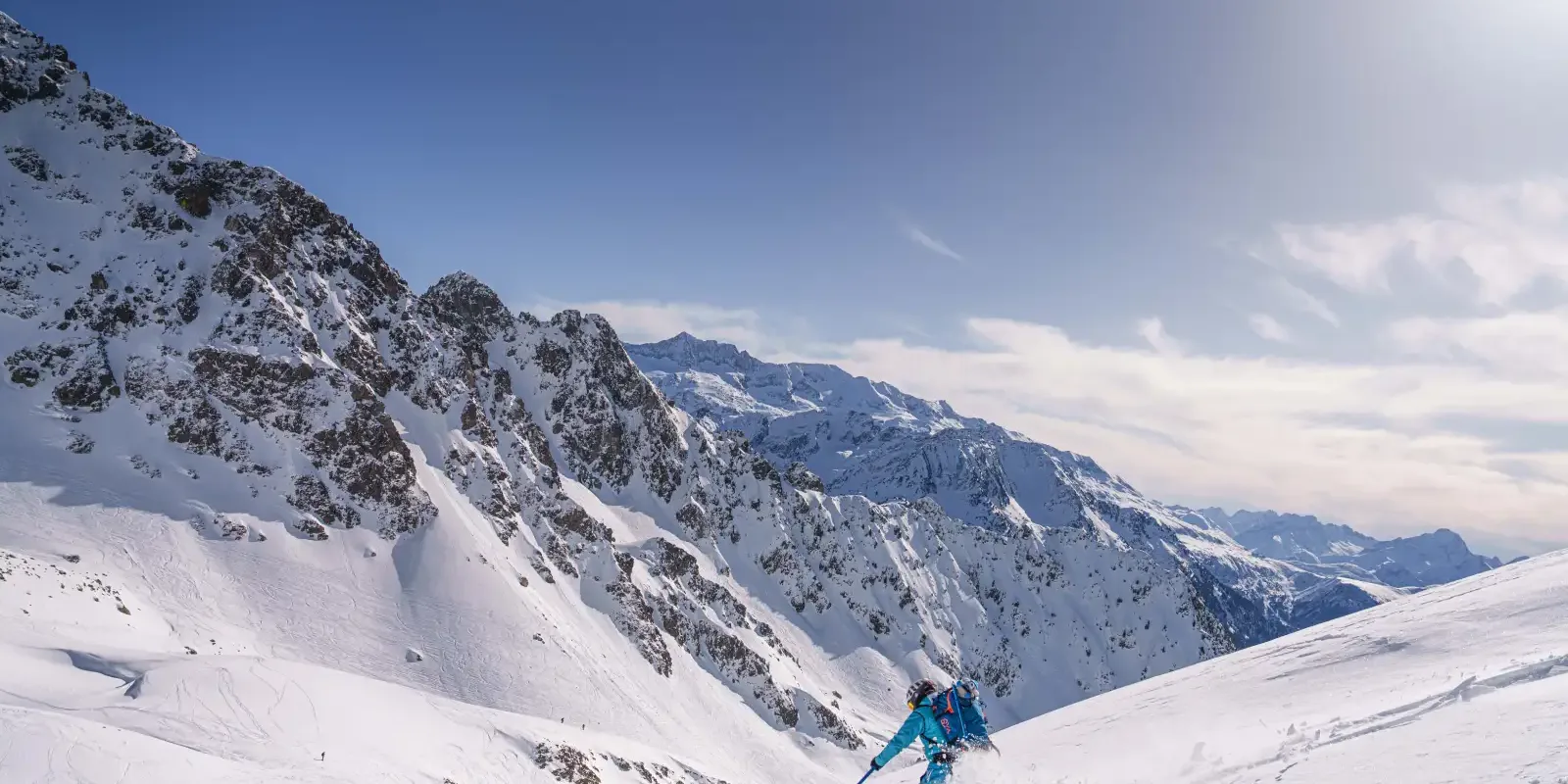
Skiing off the marked trails allows you to discover another facet of the mountain. However, the Skiing off-piste It exposes practitioners to specific dangers: avalanches, changes in the snow cover, natural obstacles, and difficulties in accessing the area for rescue teams.
Preparation therefore plays an essential role. Before a departure, the professional analyses, among other things, the meteorological and topographical conditions, studies the planned route, and takes into account the characteristics of the group.
However, no analysis can completely eliminate the risks associated with the mountains. The objective is rather to identify the dangers, adapt its decisions and reduce the group’s exposure.
That is why the ESi encourages the regular updating of its professionals’ skills.
Learning to analyze the conditions and terrain
During these training sessions, the instructors work, among other things, on strategies for progression off-piste.
Even before putting on the skis, the briefing is an important step. The professional presents the route, reminds participants of the instructions, and checks that the participants understand the course of the outing.
Then, the analysis continues directly on the field. The monitors learn to observe the various available indicators and to compare their observations with the information gathered before departure.
They are also working on identifying the potentially dangerous terrain configurations. The inclination of a slope, its orientation, accumulations linked to the wind or even recent changes in conditions can in particular influence route choices.
Thus, decision-making accompanies the professional throughout the entire process of leaving the workplace.
Adapting the group's progression off-piste
Safety does not depend solely on the choice of route. The way the group operates on the ground also plays an important role.
During the internships, the professionals therefore work in different ways. progression guidelines off-piste. Depending on the terrain configuration, they can, among other things, adjust the distances between the skiers, define stopping zones or organize the group’s passage.
Furthermore, the instructor must take into account the technical level, experience, and physical condition of the participants. A route adapted to experienced skiers will not necessarily suit a group that is discovering off-piste skiing.
This ability to adapt is an integral part of the supervisory work.
Training in DVA search and avalanche rescue
The training courses also place great importance on Avalanche rescue. In an emergency situation, the first few minutes count. Therefore, practitioners must know their equipment and regularly practice the necessary maneuvers.
On the field, the coaches perform exercises such as search with a DVA (avalanche victim detector). They then work on the survey and the techniques of digging with a shovel.
The scenarios also allow for dealing with situations involving multiple victims. In this context, professionals must quickly organize the search, assign roles, and coordinate various actions.
These training sessions allow for the repetition of procedures and the development of automatisms. However, they primarily recall a fundamental priority: do everything possible to prevent the accident through analysis and risk management.
DVA, shovel and probe: knowing and mastering your equipment
To operate in terrain prone to avalanches, possessing safety equipment is not enough; it is also necessary to know how to use it quickly and correctly.
The trio DVA, shovel and probe constitutes thus an essential base of individual equipment for the outings concerned by the avalanche risk. Moreover, each member of the group must know their equipment and regularly practice its use.
The exercises organized during the training sessions therefore allow the instructors to maintain their operational level and to work with different search configurations.
Prevention, decision-making and professional responsibility
Beyond the technical aspects, these courses also address the responsibility associated with leading a group in the mountains.
The discussions mainly concern the preparation of the exit, the decisions taken on the ground, communication with the participants, and the organization of emergency aid in the event of an accident.
Trainers can also discuss the legal aspects related to professional supervision and the possible consequences of an accident. These topics allow the trainers to place their decisions in a broader context.
Thus, the off-piste safety training It combines technical knowledge, field experience, prevention, and reflection on decision-making.
Continue to train to better guide in the mountains
Through these training days, the ESi aims to maintain a genuine culture of safety among its instructors.
The DVA research exercises, the analysis of the snowpack, terrain reading and progression strategies allow professionals to put their knowledge to the test in real-life situations.
Furthermore, exchanges with specialized organizations and relief professionals enrich this approach. They allow for the sharing of experiences and the work on issues directly related to the field.
Finally, choose a mountain professional trained for off-piste outings This allows you to benefit from their experience, their knowledge of the terrain, and their ability to adapt the route to the conditions of the day.
However, zero risk does not exist in the mountains. Prevention, preparation and decision-making remain essential in order to enjoy off-piste adventures responsibly.
Off-piste skiing lessons