During the school holidays, the slopes can quickly become very crowded. Beginners, children, families, and experienced skiers all move through the same areas. To fully enjoy the mountain, everyone must adopt responsible behavior and respect other users.
The 10 rules of skiing are the main rules to know before venturing onto the slopes. They allow you to better anticipate risky situations and share the ski area in good conditions.
The 10 rules of skiing that you need to know
1. Respect other skiers
Every skier or snowboarder must adopt behavior that does not put other users in danger. Their equipment and manner of skiing must also not cause them any harm.
👉ESI Council: Your trajectory and speed must always take into account the people around you.
2. Adapt your speed and behavior
The speed must remain compatible with its technical level, visibility, snow quality, the difficulty of the piste and its usage.
👉ESI Council: When the tracks are busy or visibility decreases, reduce your speed and increase your alertness.
3. Mastering your trajectory
The skier in the upstream area must choose his or her trajectory in such a way as to preserve the safety of those who are moving below him or her.
👉ESI Council: Look far ahead and anticipate the movements of other skiers, especially in the beginner areas.
4. Pass with enough space
A pass can be made either to the right or to the left, upstream or downstream. The skier who makes the pass must always leave enough space to avoid a collision.
👉ESI Council: Don't just watch the skier you're overtaking. Also anticipate their trajectory.
5. Check before leaving or crossing
After stopping or entering a new track, it is necessary to check that no other skier is approaching before proceeding.
👉ESI Council: Look upstream and downstream before leaving. A few seconds of observation can prevent a collision.
5. Check before leaving or crossing
After stopping or entering a new track, it is necessary to check that no other skier is approaching before proceeding.
👉ESI Council: Look upstream and downstream before leaving. A few seconds of observation can prevent a collision.
6. Choose your location carefully when stopping
Avoid stopping in a narrow passage, behind a bump or in an area where you are not visible. After a fall, clear the trail as soon as possible.
👉ESI Council: Always prioritize the side of the piste and choose an area where you remain visible to other skiers.
7. Walking on the edge of the track
When it is necessary to climb or descend a slope on foot, one must stay on the side in order not to disturb other users.
👉ESI Council: Be especially careful when you are walking in a crowded area.
8. Respect the markings and signage
Signage, signs and information regarding the conditions of the ski area must be observed. A closed slope must never be used.
👉ESI Council: Before leaving, check the opening times of the slopes and the weather conditions.
9. Provide assistance in case of an accident
Any person who witnessed or was involved in an accident must, within the limits of their abilities, provide assistance and call for help.
👉ESI Council: Before your ski day, memorize the ski resort’s emergency number.
10. Giving your identity after an accident
Everyone involved in or witnessing an accident must be able to provide their identity.
👉ESI Council: In the event of an accident, do not leave the premises without ensuring that your presence is no longer necessary.
Why follow safety rules on the slopes?
Adhering to the rules of skiing is not just for beginners. Every user of the ski area contributes to collective safety, regardless of their level.
Good control of speed, anticipation of trajectories and constant attention help reduce the risk of collisions. These reflexes become even more important during periods of high traffic.
Learning to ski is also learning to share the mountain
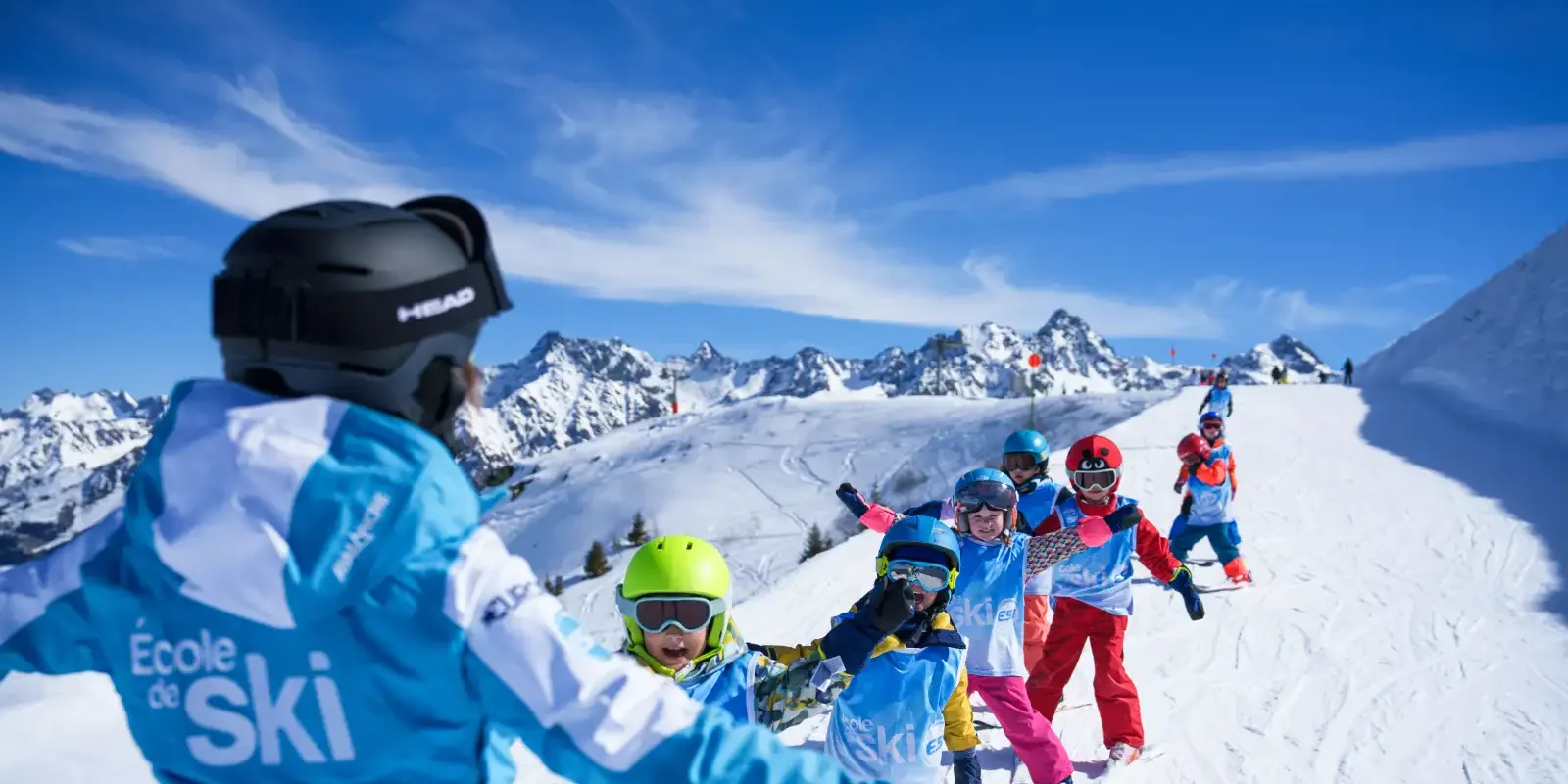
From the very first lessons, ESi instructors educate both children and adults on good behavior on the slopes. Beyond technique, learning to ski also means knowing how to observe, anticipate, and respect others.
With teaching adapted to each level, ski lessons allow you to progress while developing the right reflexes necessary to move confidently around the ski area.
👉 Do you want to progress safely? Discover the ESi ski courses for children, beginners and adults and learn the right reflexes directly on the slopes.
Discover the ski courses for children