The mountains are a fantastic playground in winter. On the ski slopes, on snowshoes or simply during a walk, snowy landscapes offer many opportunities for spectacular photos. However, when you don't know the area, finding the best photo spots in the mountains can quickly become complicated.
Snow-covered summits, 360° panoramas, waterfalls, works of art or unusual rock formations: the Alps, the Pyrenees, the Jura and the Swiss mountains are full of photogenic places. We have therefore selected 10 must-see photo spots in winter to immortalize your stay in the mountains.
1 / Courchevel – The works of Richard Orlinski
In Courchevel, contemporary art has made its way onto the ski slopes. On the occasion of the event Art at the Summit, the works of artist Richard Orlinski have taken over various parts of the resort.
Deer, panda or even giant gorilla: these colorful sculptures create an astonishing contrast with the snow and the alpine landscapes. Thus, the slopes transform into a veritable open-air museum.
These works also make excellent backdrops for creating original photos during a ski day. Between contemporary art and mountain panorama, Courchevel offers a different way to immortalize your snow holiday.
2 / Tignes – L’Aiguille Percée
In Tignes, the Aiguille Percée is one of the most recognisable natural curiosities of the ski area. This spectacular rock formation creates a huge natural arch in the heart of the mountain.
Located at an altitude of about 2,700 meters, it overlooks the surrounding landscape and offers a particularly photogenic backdrop. In winter, the snow further accentuates the contrast with the rock.
Furthermore, skiers can access the sector from the ski resort when conditions and slopes allow it. The Aiguille Percée therefore constitutes a must-see photo spot in Tignes to bring back a different memory of your day on the slopes.
3 / Val Cenis – La Canopée des Cimes
If you are looking for spectacular views in the heart of the Alps, head to Canopée des Cimes in Val Cenis. This panoramic platform allows you to get a bird's-eye view and admire the surrounding mountains.
Located on the ski area, it offers a remarkable view of the Haute Maurienne and the Mont-Cenis lake. On a clear day, the peaks seem to stretch out into the distance.
Thanks to this clear view, the Canopée des Cimes naturally becomes an excellent spot for photographing the alpine landscapes. Consider using your camera’s or smartphone’s panorama mode to capture the vastness of the scenery.
4 / Gavarnie – The Cirque de Gavarnie
In the Pyrenees, the Cirque de Gavarnie offers one of the most impressive mountain landscapes in France. The site is part of the Pyrénées-Mont Perdu region, which is a UNESCO World Heritage Site.
Enormous rocky walls surround this natural amphitheater and form a monumental setting. Its famous Grand Cascade adds even more character to the landscape.
In winter, the snow transforms the place completely. The white of the peaks, the ice and the cliffs create a particularly photogenic atmosphere.
However, winter conditions in the mountains require caution. Before any outing, check the weather, the snow conditions, and the access conditions. Depending on the planned itinerary, professional guidance may also be necessary.
5 / Grand Tourmalet – The Pic du Midi
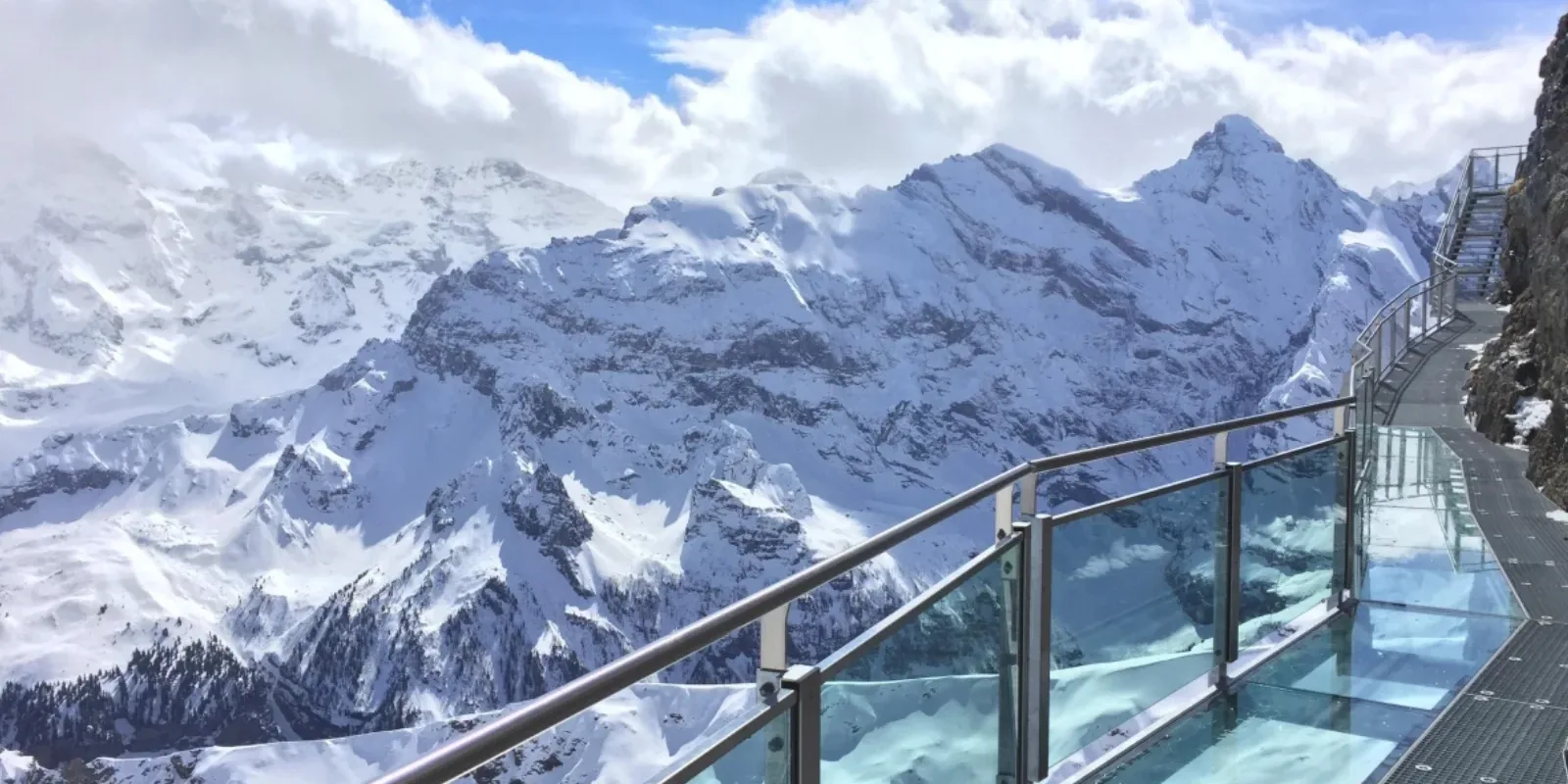
Dominating the Pyrenees, the Pic du Midi de Bigorre constitutes another exceptional spot for photography enthusiasts. From the terraces located at high altitude, the view extends over a large part of the Pyrenees range.
The site also houses a famous astronomical observatory. Moreover, a walkway built over the void allows visitors to enjoy a particularly impressive view of the mountains.
When the conditions are right, a sea of clouds can cover the valleys and only the peaks emerge. The spectacle becomes breathtaking.
Finally, the Pic du Midi enjoys a privileged environment for observing the night sky. Astrophotography enthusiasts can thus discover a whole new facet of the mountain once night falls.
6 / Glacier du Rhône – The Ice Cave
In Switzerland, the Rhône glacier offers a landscape very different from traditional mountain panoramas. In the Furka Pass area, visitors can, depending on conditions and opening times, discover a cave carved into the ice.
Inside, the light passes through the ice and creates beautiful shades of blue. The decor then creates an almost unreal atmosphere and allows for particularly original photographs.
However, a glacier is constantly evolving. Access conditions, the state of the facilities, and opening times may therefore change. Before your trip, always check the updated information from local operators and tourism organizations.
7 / The Lauterbrunnen Valley
With its impressive cliffs, peaks, and numerous waterfalls, the Lauterbrunnen valley is among the most iconic landscapes of the Swiss Alps.
The village of Lauterbrunnen is an excellent starting point for exploring the valley. Then, mountain transport allows, among other things, reaching Wengen and various sectors located at high altitude.
In winter, the snow-capped peaks contrast with the vertical cliffs and alpine villages. Each change in light then transforms the landscape.
For photographers, the valley offers a multitude of possibilities: waterfalls, chalets, mountain railways, snowy panoramas and majestic peaks. An essential stop on a visit to this part of Switzerland.
8 / Zermatt – Face to face with the Matterhorn
It is impossible to talk about the most beautiful photo spots in the Alps without mentioning Zermatt and the Matterhorn. With its instantly recognisable pyramid shape, this peak is one of the symbols of the Swiss mountains.
The village of Zermatt already offers many viewpoints. However, the ski lifts and mountain trails allow you to change perspectives and photograph the Matterhorn from different angles.
When the sky stays clear after sunset, night photography enthusiasts can also try to capture the stars above the peaks. For better results, look for a permitted area away from the main sources of light.
Beyond the Matterhorn, Zermatt is located in the heart of an exceptional environment dominated by numerous peaks over 4,000 meters. Among glaciers, ski slopes, and high-mountain landscapes, there is no shortage of opportunities to bring out your camera.
9 / Doubs – Fort Saint-Antoine
We completely change the atmosphere with the Fort Saint-Antoine, located in the Doubs, near Métabief. Built at the end of the 19th century, this former military fort now houses Comté cheese maturing cellars.
Its stone galleries and impressive wheels of cheese create a very special atmosphere. The place offers an interesting contrast with the snowy landscapes usually associated with mountain holidays.
During the guided tours, visitors can discover the history of the fort and the work involved in maturing Comté. For lovers of food and photography, this stop adds an unusual touch to a stay in the Jura Mountains.
10 / Jura – The Hérisson Falls
To conclude this selection, head to the Hérisson waterfalls in the Jura. The Hérisson flows through a remarkable natural setting and forms a series of waterfalls and cascades.
Among the most impressive ones are the Saut de l’Éventail and the Grand Saut. The trail thus allows you to discover several landscapes as you walk along it.
In winter, snow and frost can transform the waterfalls and create a spectacular atmosphere. The rocks, the snow-covered trees, and the water then offer many opportunities for photographers.
However, ice can make the paths particularly slippery. Before your visit, therefore, check the access conditions and equip yourself accordingly.
Photographing the mountain in winter: prepare your outing
These 10 photo spots in the mountains show the full diversity of landscapes you can discover in winter. From the French Alps to the Pyrenees, via the Jura and Switzerland, each destination has its own character.
Before leaving, however, check the weather conditions and local information. In the mountains, the weather changes quickly and some routes can become difficult or dangerous in winter.
Finally, respect the trails, protected areas, and wildlife. This way, you can fully enjoy these landscapes while helping to preserve the natural spaces that make the mountains so photogenic.
So, on to the summits… and don’t forget your camera!
See the best snowparks in France and Switzerland