1. It all starts with the evaporation of water
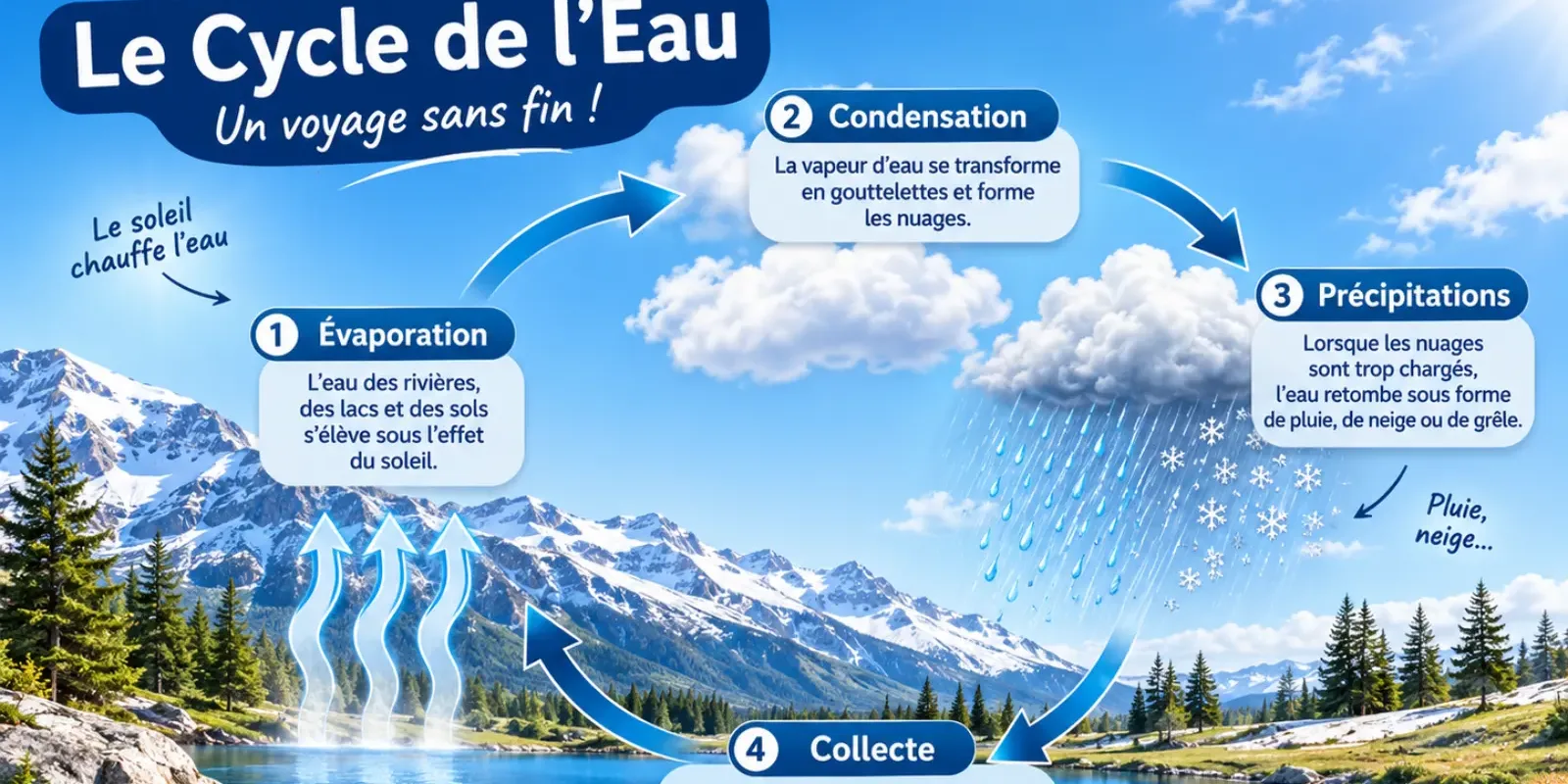
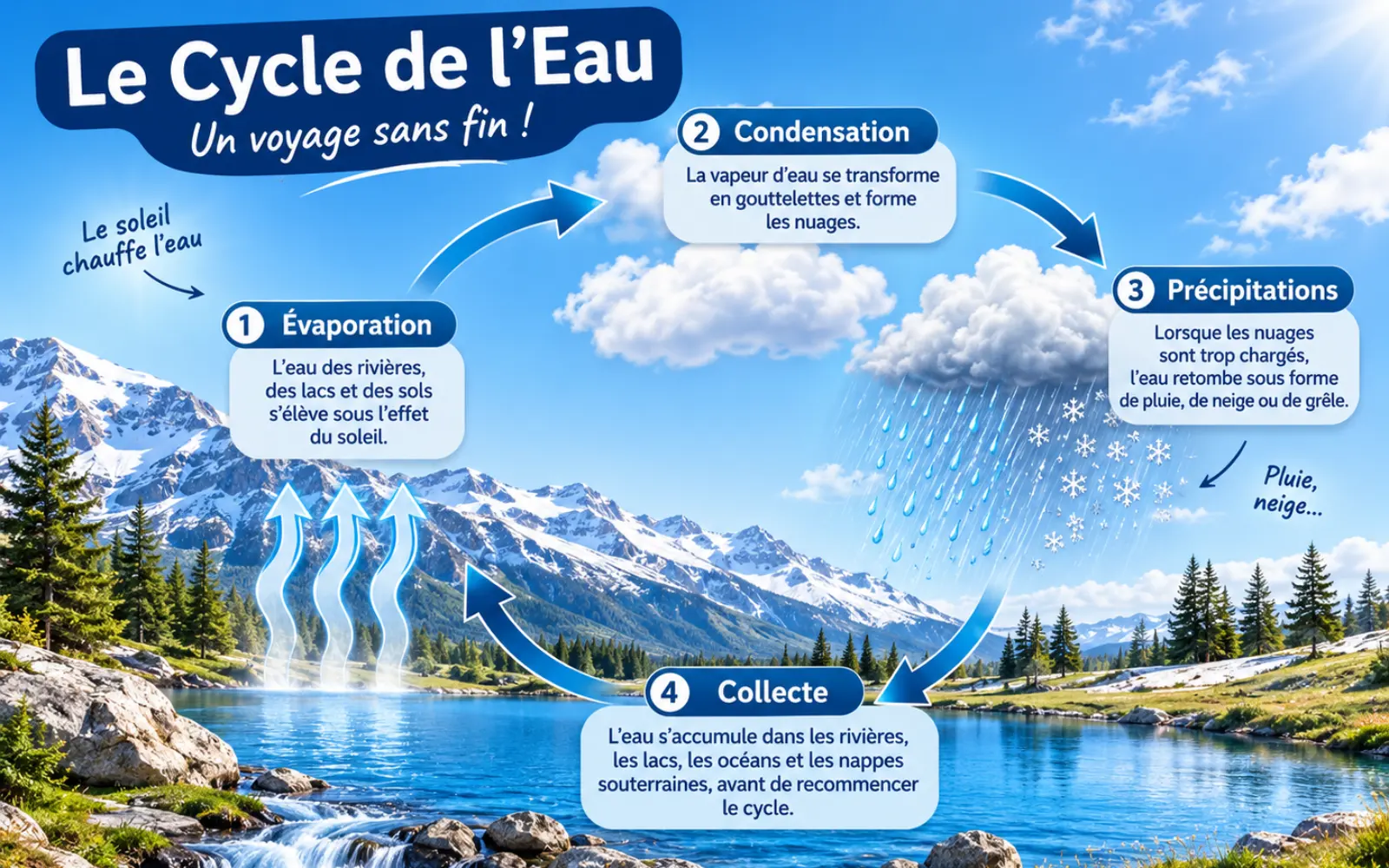
The snow comes from the water present in the atmosphere. Under the influence of the sun, the water from the oceans, lakes and rivers evaporates. It then transforms into water vapor and joins the upper layers of the atmosphere. The ascending currents transport this moisture to colder altitudes. As they ascend, the air cools down. The water vapor then contributes to the formation of clouds, composed of tiny droplets and ice crystals.
source weatherFrance
How do the first snowflakes form?
In sufficiently cold clouds, the temperature drops below 0 °C. Yet, some water droplets remain liquid despite the cold. Meteorologists call this phenomenon the surfusion. Microscopic particles, such as dust or pollen, then favor the formation of the first ice crystals. The water vapor deposits directly onto these tiny frozen germs. This phenomenon is known as water vapor deposition. Gradually, the crystals grow and develop characteristic geometric shapes.
3. Why do the flakes have six branches?
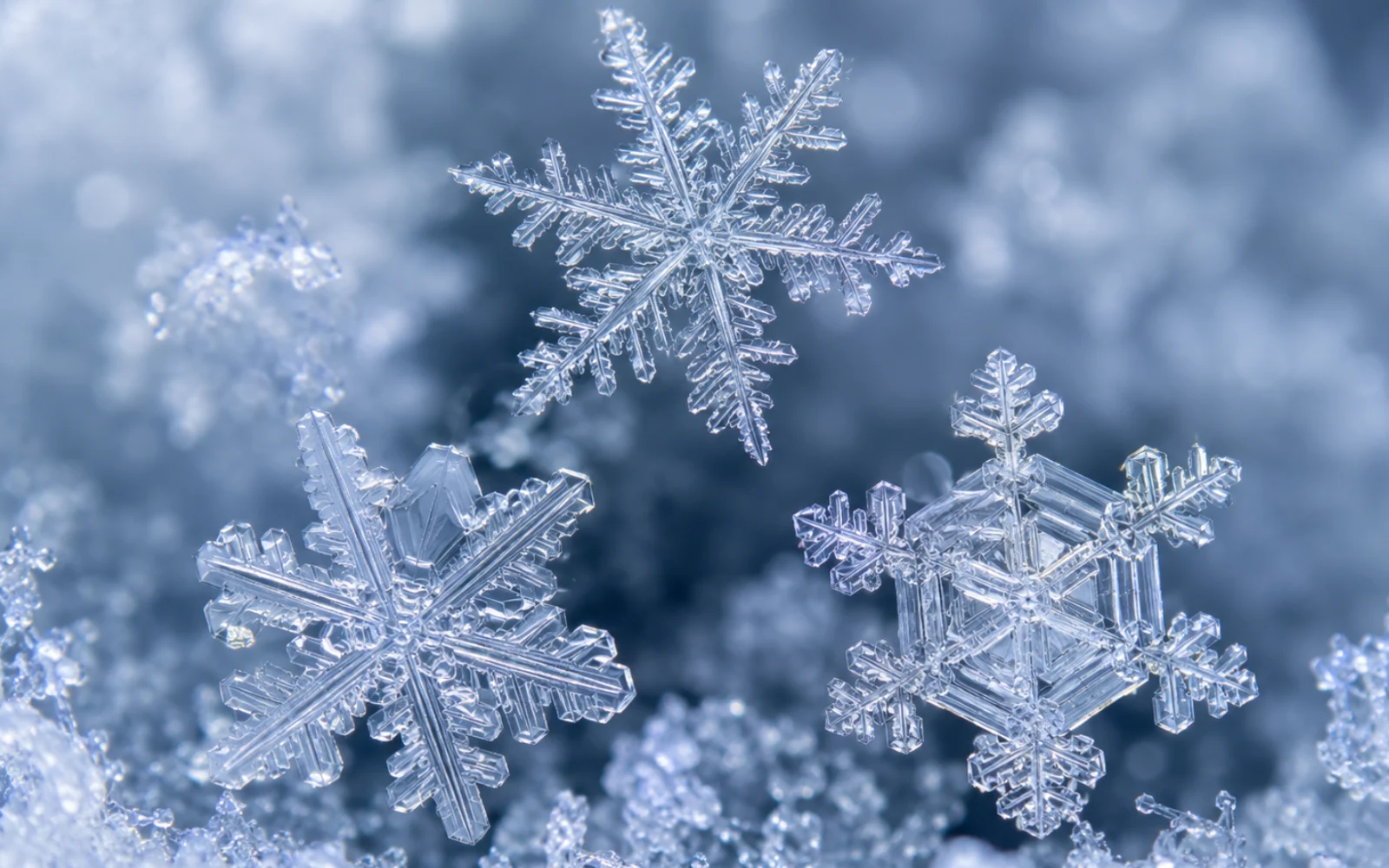
Snow crystals often have a hexagonal structure. This characteristic stems from the organization of the water molecules in the ice. However, not all crystals resemble small stars. Their appearance depends primarily on the temperature and humidity of the cloud.
There are several forms in particular:
-
- The stars: they develop thin, branched branches.
- The pads: they resemble small hexagonal discs.
- The needles: they take an elongated shape.
- The columns: they have a cylindrical crystalline structure.
Each crystal undergoes different atmospheric conditions. These variations explain the great diversity of flakes.
For more information about these variations, feel free to consult the article Science of snow
4. How do the crystals become flakes?
During their growth, the crystals encounter other icy particles in the cloud. They can then stick to each other. This encounter forms clusters of several crystals: the snowflakes. The wind and the movements of the air also influence their trajectory. They can break some branches or change their assembly. When the snowflakes become sufficiently heavy, they begin to fall towards the ground.
5. Why does it sometimes snow in the plains and sometimes only in the mountains?
Temperature plays an essential role, but it is not enough to explain the snowfall. The flakes pass through several layers of air before reaching the ground. If a warm layer appears during their journey, they can melt and turn into rain. Conversely, an atmosphere cold enough allows the flakes to retain their structure until they reach the ground. That is why snow falls more frequently in the mountains. Altitude generally favors lower temperatures.
However, snow can also reach the plains when the atmospheric conditions are right. The temperature of the ground therefore does not, by itself, determine the nature of the precipitation.
6. Why is the snow different from one fall to the next?
Not all snowfalls produce the same quality of snow. Several meteorological factors influence the characteristics of the flakes.
- The temperature: it influences the shape and growth of the crystals.
- Humidity: it promotes the development of crystals and their assembly.
- The wind: it carries, fragments and compacts the flakes.
- The temperature during the fall: it partly determines the amount of snow that reaches the ground
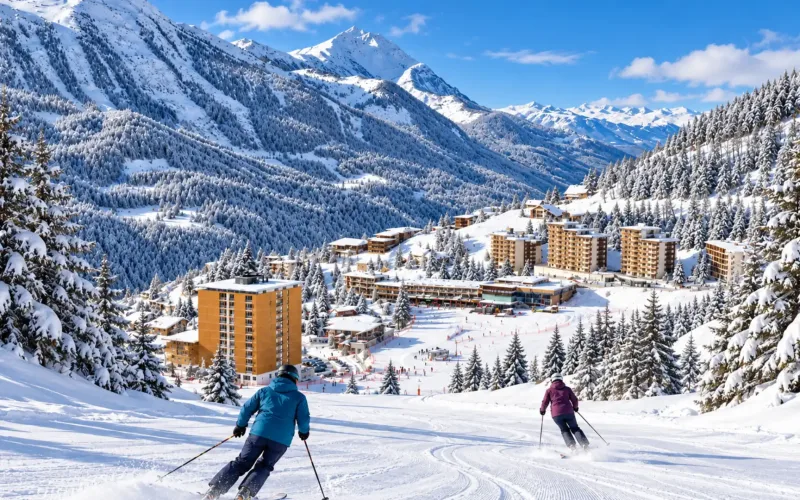
These conditions explain the differences between powder snow, wet snow and heavy snow. In the mountains, these variations directly influence the ski conditions. They also modify the evolution of the snowpack after each snowfall.
7. What happens to the snow when it touches the ground?
Once on the ground, the flakes accumulate and form the snow cover. But their transformation doesn’t stop there!
- Snow changes constantly due to weather conditions.
- The cold gradually changes the shape of the crystals.
- The sun favors warming and melting.
- The wind moves and compacts the snow.
- The rain brings liquid water to the snow-covered mantle.
These transformations are called the metamorphoses of snow. They play an important role in the quality of the snow and the stability of the snowpack.
For skiers, they explain why a ski slope can present very different conditions from one day to the next.
Frequently asked questions about the formation of snow
At what temperature does it start to snow?
Snow crystals form in clouds at negative temperatures. However, the flakes can reach the ground when the air near the ground slightly exceeds 0 °C. It all depends on the thermal profile of the atmosphere.
Why do snowflakes have a hexagonal shape?
Water molecules naturally organize themselves into a hexagonal crystalline structure when they form ice. This organization gives the crystals their six sides or six branches.
Are there two identical snowflakes?
Each flake follows a particular trajectory in the atmosphere. It therefore encounters different temperature and humidity conditions. This diversity makes each assemblage of crystals unique in practice.
What is the difference between a snowflake and a snowflake crystal?
A snowflake refers to an individual structure of ice. A flake can correspond to a single crystal or to several crystals assembled together.
Why is the snow white?
Snow contains many ice crystals that scatter light in different directions. This scattering gives snow its white appearance, even though the ice is transparent individually.