Ski lessons for children? Trusting your child to a ski school for the first time is often as important a step for parents as it is for the children. «Will he/she cry?» «Will he/she be safe?» «Is he/she young enough to start?»… These questions are quite normal.
The ESI instructors accompany thousands of children every winter, from toddlers to experienced young skiers. Thanks to their experience and adapted teaching methods, they know how to create a reassuring environment where each child progresses at their own pace.
Here are 10 tips for getting started with your first ski lessons with confidence.
1) 1st Tips for your children's ski lessons, Trust the instructors
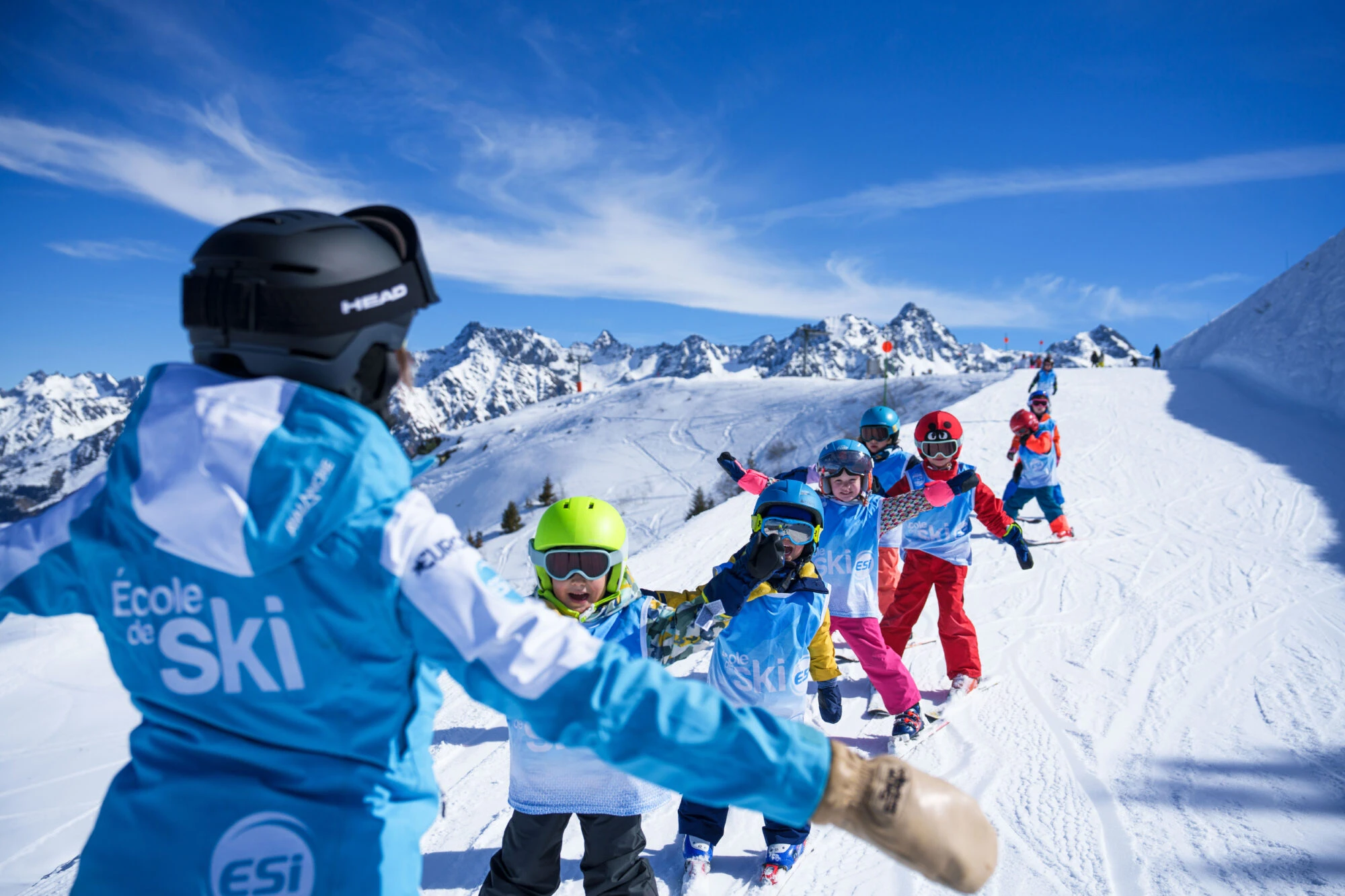
ESI instructors are trained to teach children, regardless of their age or level. They know how to build confidence in the most shy children, manage small moments of emotion, and transform learning into a playful experience.
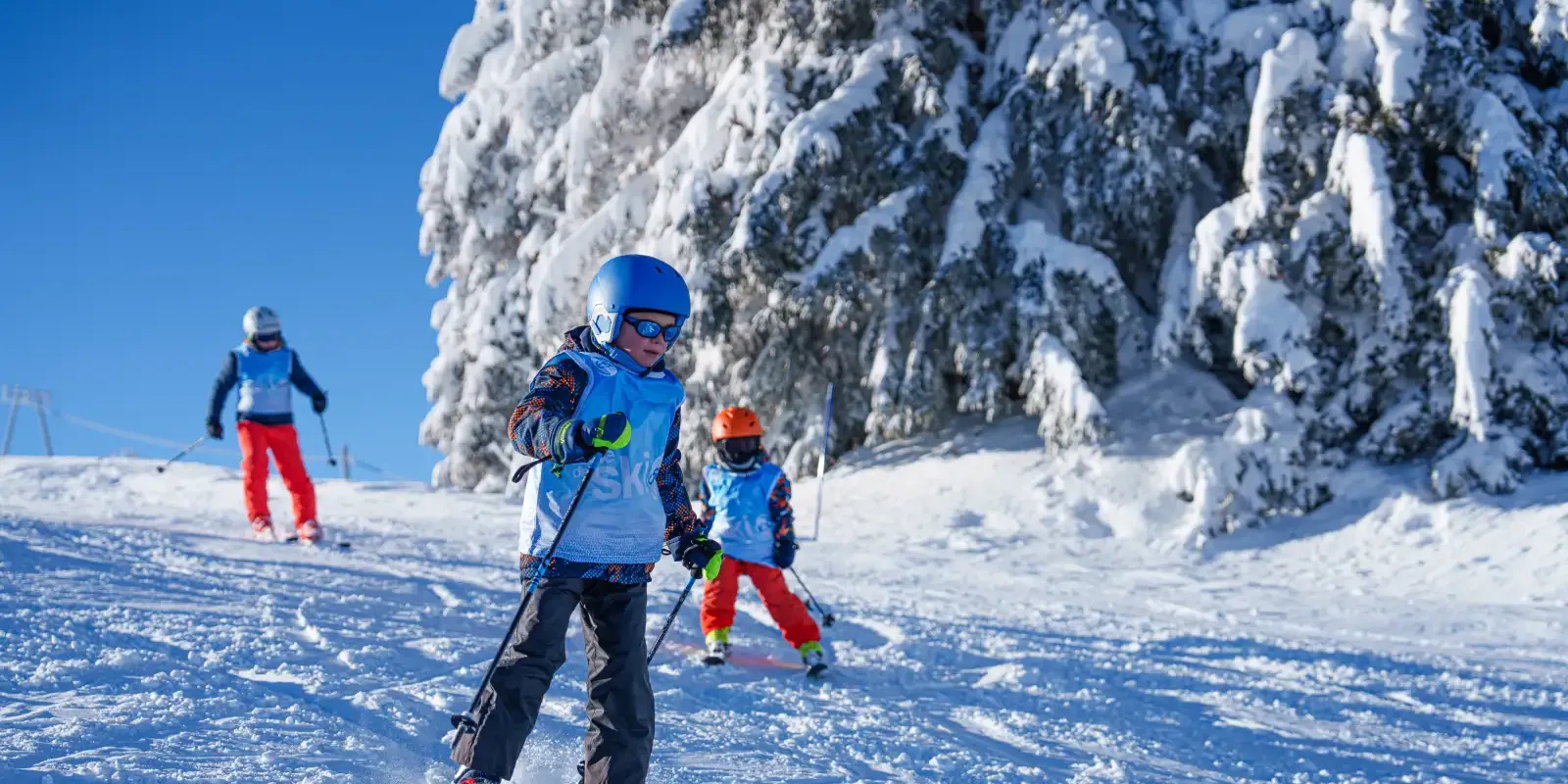
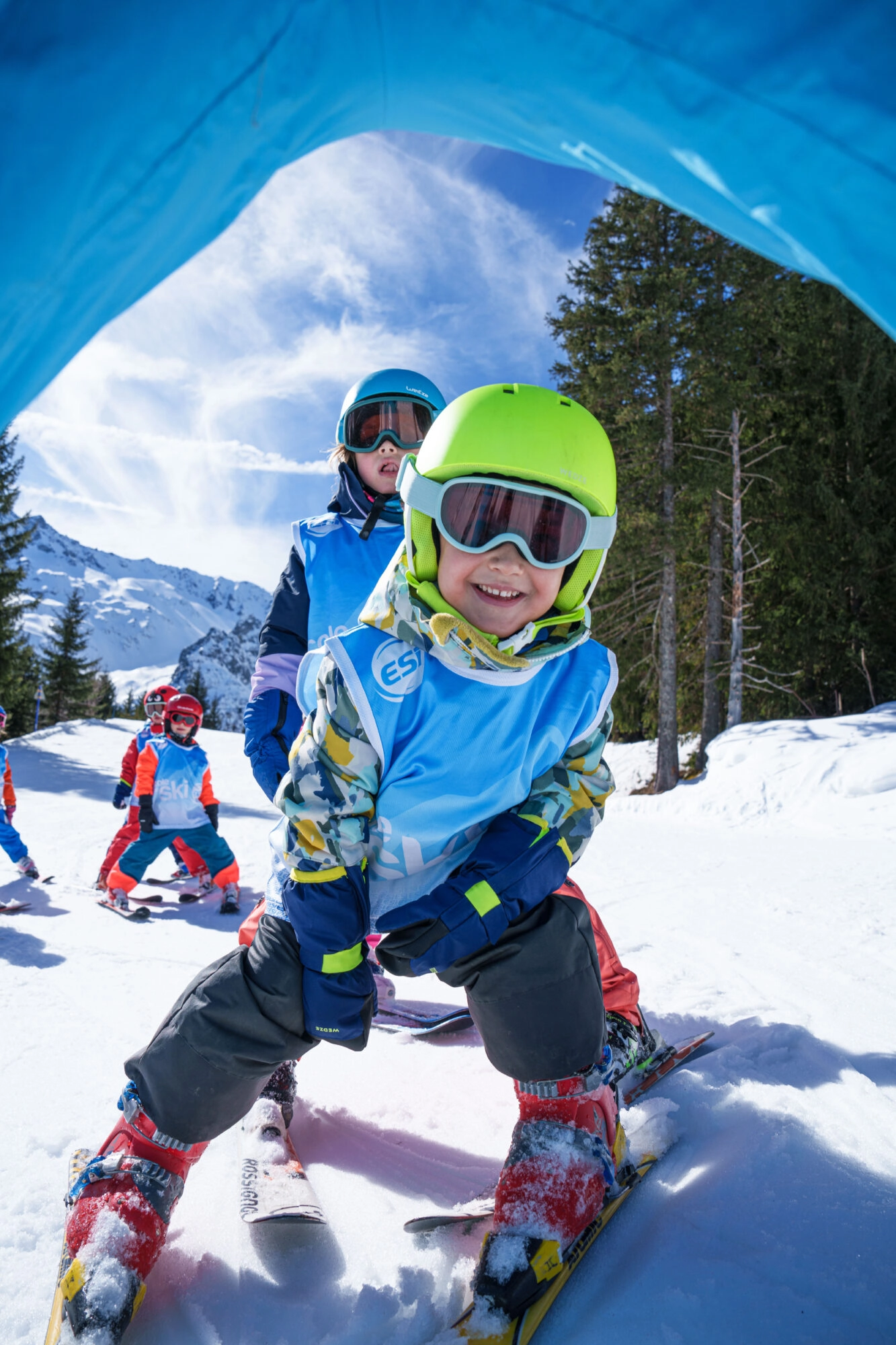
Within a few minutes, most children forget their apprehension and focus on the games, exercises, and their new friends in the skate park.
See what a class looks like
2) Don't worry if your child cries at first
This is probably the biggest concern of parents… yet it is a very common situation.
The best approach is to entrust your child to the instructor with a smile, then to leave without prolonging the goodbye. Professionals note that the crying often subsides a few minutes after the start of the class, once the child has been integrated into the group. Staying nearby or returning to see them risks prolonging their anxiety.
3) Check that your child is enrolled in the right level
A child who finds themselves in a group that is too difficult can quickly lose confidence. Conversely, a level that is too easy can become boring.
In case of doubt, do not hesitate to ask your ski school for advice before the start of the lessons. The instructors can also adjust the groups if necessary so that everyone can progress in the best possible conditions.
4) Prepare his equipment the day before
A well-equipped child benefits more from their lessons.
Before leaving, check that he/she has:
- warm and waterproof clothing; ;
- helmet; ;
- mask or sunglasses; ;
- gloves; ;
- appropriate ski equipment (no poles for the youngest); ;
- sunscreen; ;
- handkerchiefs; ;
- a small snack in your pocket when recommended.
The fewer minor annoyances related to cold or discomfort, the more your child will be able to focus on the pleasure of skiing.
4) Arrive a few minutes early in advance
Running all the way to the meeting point creates unnecessary stress. Plan to arrive about ten minutes before the start of the class to take the time to check your shoes, adjust your helmet, and allow your child to quietly discover their group. This small margin allows you to start the session in peace.
Relax, we'll take care of everything.
4) Leave the monitors manage the course
It is natural to want to observe your child as they progress on the slopes.
However, when a parent remains visible during the lesson, many children look up to see their parent, become distracted, or want to join them. Ski schools generally recommend letting children experience the activity independently, then meeting the instructor at the end to review their progress.
7) Accept that each child progresses at its own pace
Some children slide easily from the first day. Others need more time to gain confidence.
The goal is not to compare progress, but to enable each child to discover skiing in good conditions. ESi pedagogical methods are based on play, repetition, and enjoyment, so that learning takes place naturally.
8) Don't put too much on it of pressure
Avoid phrases like:
- «You have to win your medal this week.»
- «Your brother was already doing red slopes at your age.»
Instead, celebrate the effort, courage, and joy taken during the session. A relaxed child learns much more easily than a child who is afraid of disappointing others.
9) Trust, even if the weather isn’t perfect
Snow, wind or a few flakes are part of the mountain experience.
Classes are usually held as long as the ski lifts are operational. The instructors naturally adapt their exercises to the weather conditions. With the right attire, children can fully enjoy their day, even when the weather is less sunny.
10) The most important thing: Let your child have fun
For a child, skiing is not just a sport.
It’s the perfect opportunity to play in the snow, discover the mountains, gain independence, make new friends, and have a wonderful holiday.
Technological progress will come naturally. What the children will remember most are the laughs, the successful descents, and the pride of having learned something new.
In summary
It’s normal to have some concerns before your child’s first ski lessons. But by choosing an experienced ski school, properly preparing your equipment, and trusting the instructors, you put yourself in the best position to enjoy a week full of discoveries.
And remember: children are often much more comfortable than you might imagine. Sometimes just a few days are enough to spark a genuine passion for the mountains and skiing.
Why choose the ESi for your ski lessons?